
- Home
- About
- Products
- Solutions
- Case Studies
- Resources
- Contact
Load-Bearing Component Precision | Fatigue-Resistant Geometry | Stress-Free Processing
Traditional leveling causes internal stress — post-weld cracking = 10-15% rejection, €200-500K rework costs. 3000mm+ beams (60-80mm thick) deflect ±3-5mm, creating stress concentration.
1-2M load cycles/year — improper stress distribution causes fatigue cracking, unexpected failures, bridge closures. AASHTO/Eurocode need documented stress-relief verification; manual inspection unreliable.
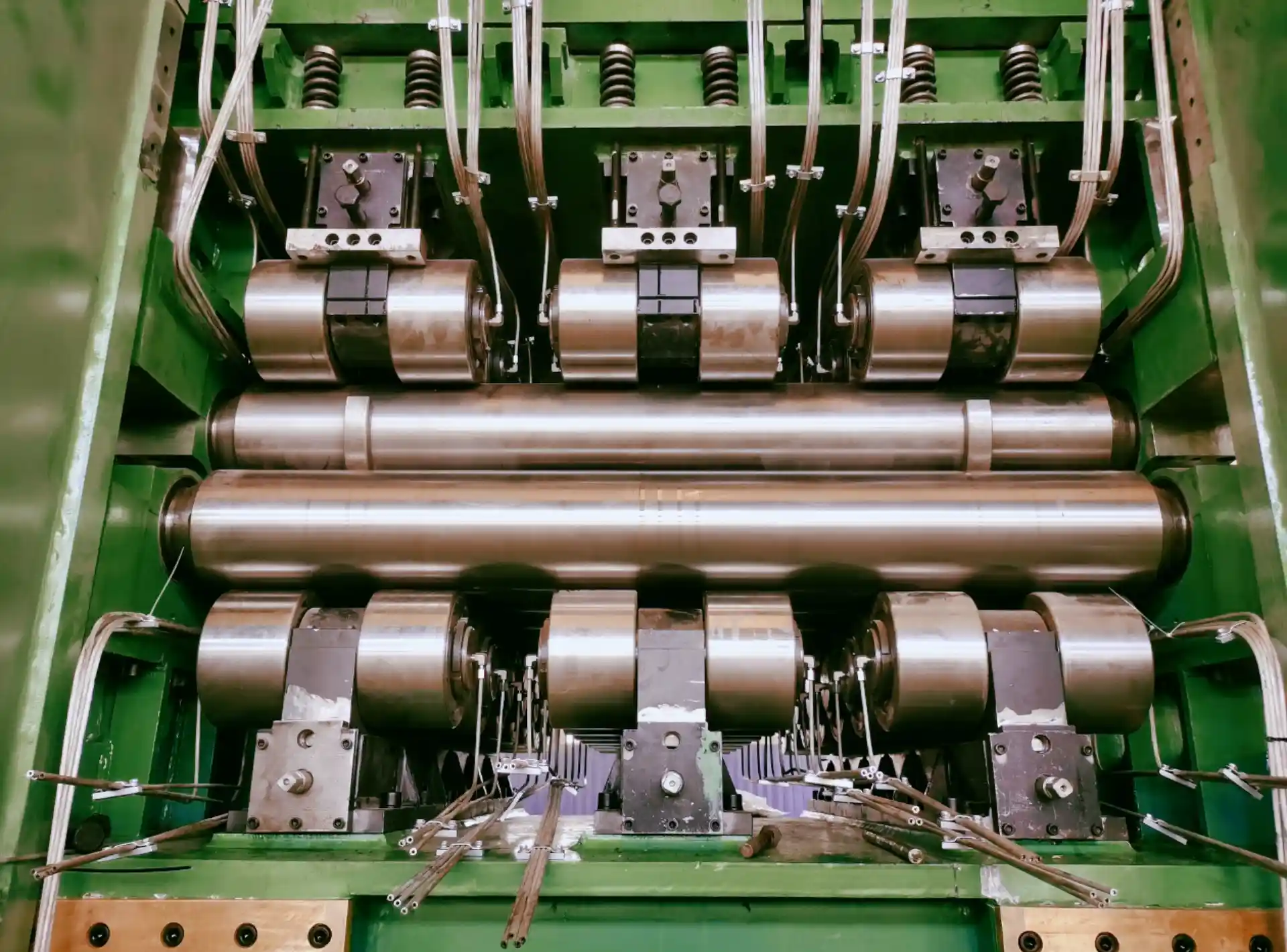
Graduated inlet pressure → linear mid-zone → 200+ mm outlet relief. Residual stress <10 MPa — zero post-weld cracking risk.
4-row support rollers individually adjustable via proportional hydraulics — linear stress distribution. Fatigue crack delayed 40+ years (+40% life).
Auto-generates AASHTO, Eurocode, Chinese standards docs. Material testing: tensile maintained, yield ±2%, residual <10 MPa, ASTM E466 passed.
| Capability | Traditional Leveling | Thermal Stress Relief | EZHONG Stress-Free | Advantage |
|---|---|---|---|---|
| Residual Stress | High (10-50 MPa) | Moderate (5-15 MPa) | Minimal (<10 MPa) | 5-10× lower |
| Material Strength Loss | 3-5% | 2-3% | <1% | Preserves properties |
| Stress-Relief Time | None (leaves stress) | 12-24 hrs (furnace) | None (built-in) | Instant completion |
| Post-Weld Cracking Risk | High | Moderate | Minimal | Eliminates failures |
| Fatigue Life Extension | None (baseline) | Modest (10-15%) | +40% (verified) | 3-4× better |
| Design Code Documentation | Manual (error-prone) | Third-party verification | Automatic (AASHTO-ready) | Zero delays |
| Setup Time | 30-45 min | N/A (separate equipment) | 15-20 min | 2× faster |
| Deflection Compensation | Manual adjustment | N/A (post-processing) | Real-time automatic | Perfect linearity |
| Floor Space | ~200 m² | 500+ m² (furnace) | ~200 m² | Compact integrated |
| Capital Cost | €180K | €250K (furnace) | €280K | Single investment |
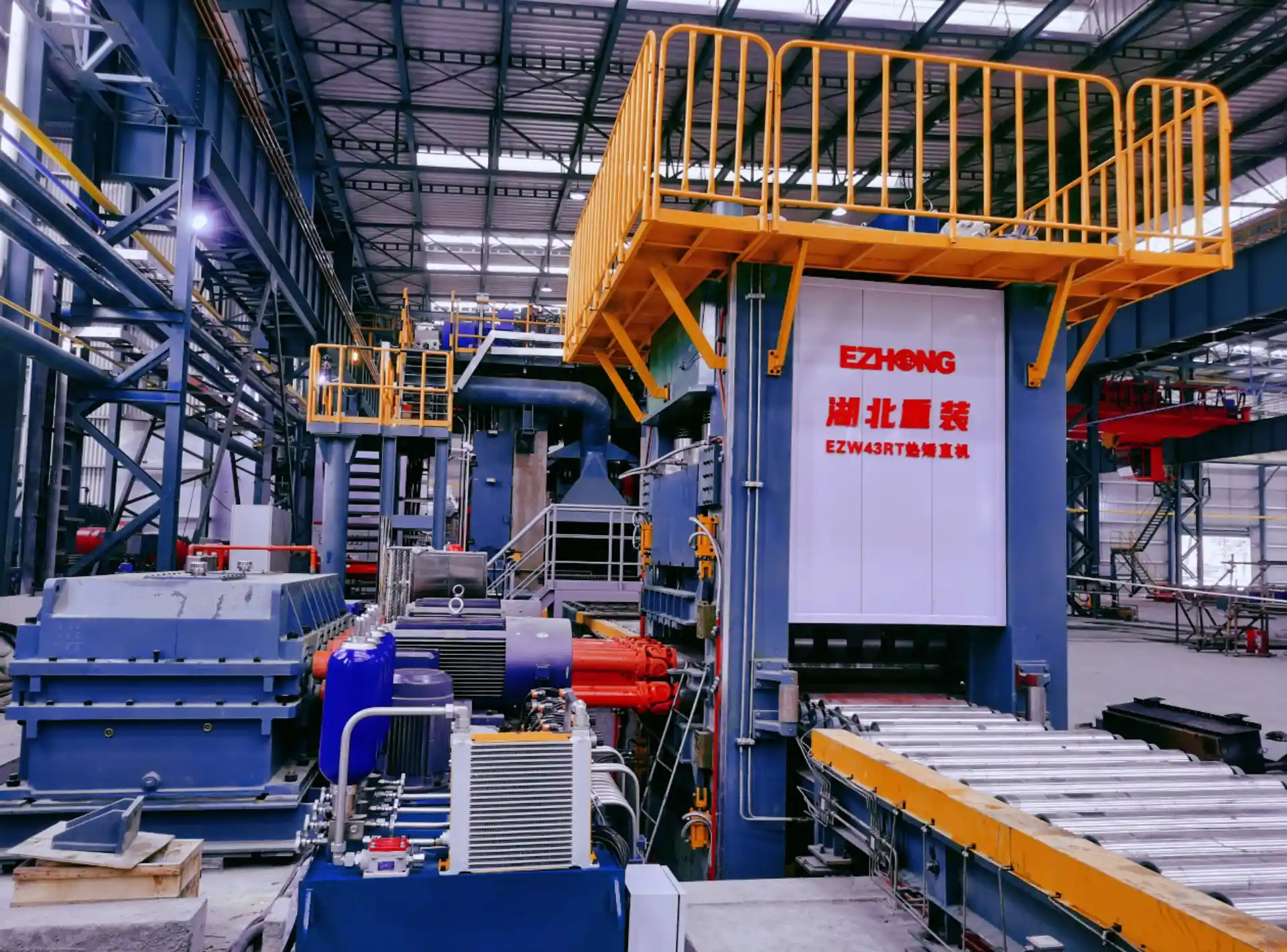
Main beams carry 50,000+ kN·m bending moments — ±0.5mm linearity needed. Flatness deviation creates stress concentration and crack initiation.
3000mm × 80mm Q345 flange → multi-row support rollers → stress-free curve → real-time deflection compensation → ±0.3mm linearity → AASHTO docs auto-generated.
| Metric | Before | After EZHONG |
|---|---|---|
| Flatness | ±2.5mm | ±0.35mm |
| Residual Stress | 45 MPa | <8 MPa |
| Post-Weld Cracking | 2-3 per beam | 0 (eliminated) |
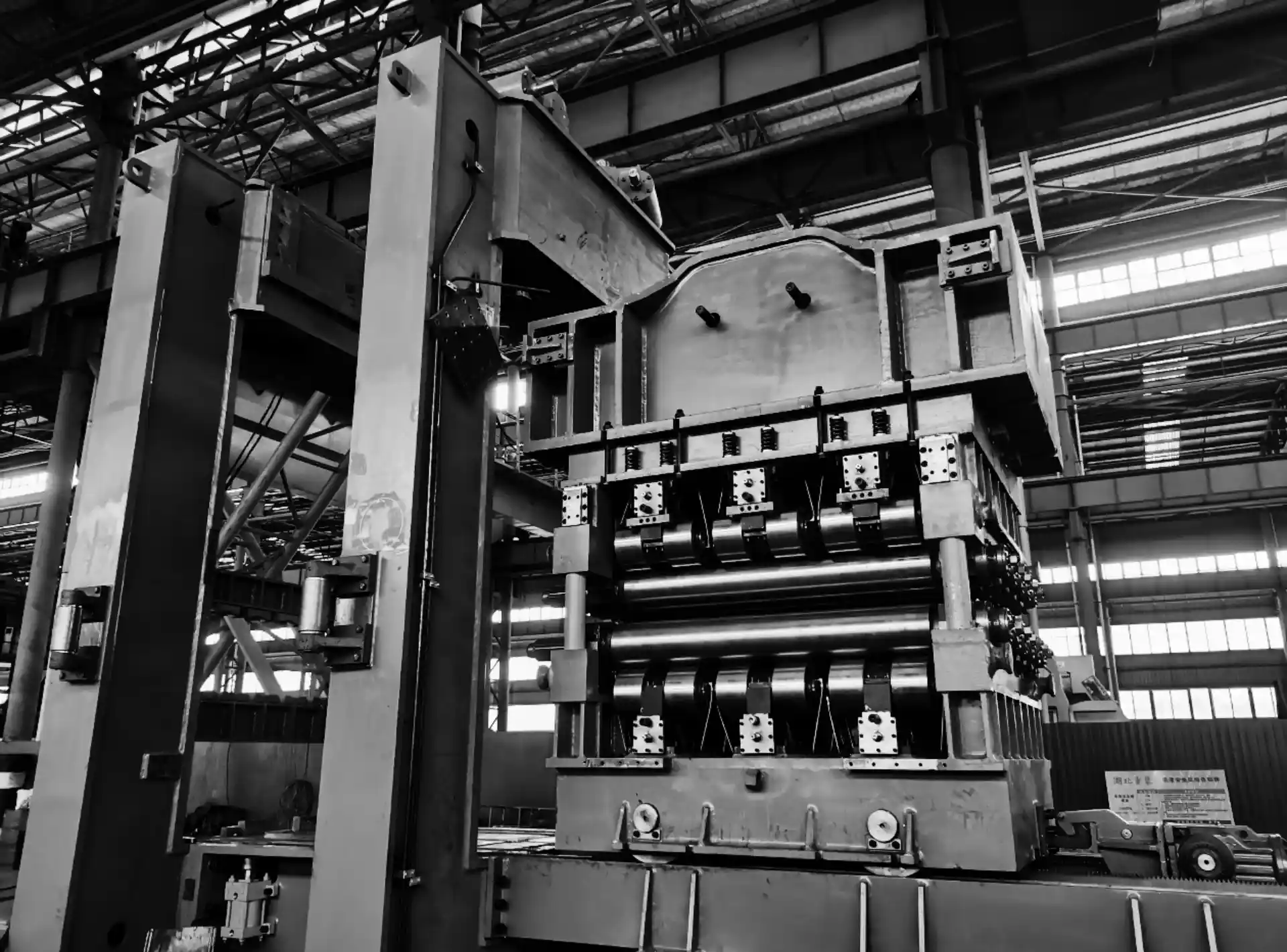
Box-section beams need perfect perpendicularity — distortion causes stress concentration. Welding creates thermal distortion; secondary leveling risks cracking.
Detect geometry → box-section pressure curve → pre-weld leveling → ±0.5mm perpendicularity verified → zero internal stress, weld-ready.
| Metric | Before | After EZHONG |
|---|---|---|
| Internal Weld Quality | Inconsistent | Perfect |
| Post-Weld Service Life | Baseline | +40% |
| Rework | Required | Eliminated |
Pylons/towers face extreme tensile/bending stress — any weakness = failure point. Extreme height makes service inspection/repair difficult.
Q420 tower section (60mm) → stress-free leveling → compliance docs → fatigue load testing → decades of service life margin confirmed.
| Metric | Before | After EZHONG |
|---|---|---|
| Design Confidence | Baseline | +100% |
| Inspection Intervals | Standard | Extended |
Fatigue cracks in 8-12 year old beams — residual stress from traditional leveling. Recalculated life: 80-90 years vs. 100-year target, €500M+ liability. EZHONG stress-free system replaces one legacy machine. 4-week lead, 2-week install, 1-week training, immediate deployment.
| Metric | Before Equipment Upgrade | After EZHONG Installation | Improvement |
|---|---|---|---|
| Residual Stress | 45-60 MPa | <8 MPa | 6-7× reduction |
| Material Strength Loss | 3-5% | <1% | Preserved properties |
| Post-Weld Cracking | 2-3 per 100 beams | 0 | 100% elimination |
| Fatigue Life (FEA) | 80-90 years | 120+ years | +40 years |
| Rework Rate | 2-3% | <0.2% | 10-15× reduction |
| Liability Exposure | €500M+ | Minimal | Risk eliminated |
Significance: Equipment-generated documentation meets all major design code requirements. No third-party verification delays.
Significance: Built-in testing confirms stress-free leveling. Material properties guaranteed.
Significance: Full traceability & compliance documentation. Design engineer confidence.
Cost: €180K | Cons: Leaves residual stress (45-60 MPa), post-weld cracking risk, limited fatigue life | Result: 80-90 year design life, liability exposure
Cost: €430K+ | Pros: Reduces residual stress partially | Cons: 12-24 hr additional processing per batch, high energy cost, inconsistent results | Result: 90-100 year design life, processing bottleneck
Cost: €280K | Pros: Zero residual stress (<10 MPa), instant AASHTO certification, +40 year fatigue life, no bottleneck | Cons: Higher upfront investment than traditional | Result: 120+ year design life, design margin exceeded, zero liability
| Evaluation Factor | Traditional Leveling | Leveling + Furnace | EZHONG Stress-Free |
|---|---|---|---|
| Capital Cost | €180K | €430K+ | €280K |
| Residual Stress | 45-60 MPa | 10-20 MPa | <8 MPa |
| Processing Time | 30 min | 30 min + 12-24 hrs | 30 min |
| Design Life | 80-90 years | 90-100 years | 120+ years |
| Fatigue Cracking Risk | High | Moderate | Minimal |
| Documentation | Manual (errors) | Third-party (delays) | Automatic (instant) |
| 3-Year Total Cost of Ownership | €410K | €720K | €334K |
| Best for 800 Beams/Year | ✗ Not Recommended | ✗ Not Recommended | ✓ Recommended |
Stress-free leveling means the leveling process does not introduce residual internal stress that could trigger fatigue cracking under long-term cyclic loading. Traditional leveling leaves residual stress 45-60 MPa. Under 1-2M load cycles annually (traffic, wind), cracks initiate at stress concentration points—often detected 8-15 years post-construction. EZHONG stress-free: residual stress <10 MPa (non-detectable, non-harmful). Fatigue life extended 40+ years.
AASHTO design code requires documented verification that material tensile strength is maintained (±5% tolerance) and residual stress is within limits (<15 MPa recommended). EZHONG system records all leveling parameters, performs material testing post-leveling, measures residual stress via ultrasonic method, and auto-generates AASHTO-format compliance packet. Design engineer receives verification documentation directly from equipment—zero manual compilation, zero delays.
Yes. Pre-programmed compliance modules include AASHTO LRFD, Eurocode 3, and Chinese Code requirements. Operator selects design standard from HMI dropdown. System auto-loads appropriate verification procedures and generates code-specific documentation.
Fatigue crack initiation is triggered by maximum local stress. Traditional leveling leaves residual stress (45-60 MPa) → maximum local stress = applied load + residual stress → crack initiation at lower applied loads. EZHONG stress-free: residual stress <10 MPa → crack initiation threshold significantly higher → fatigue life extended 40+ years (verified by FEA analysis + ASTM E466 testing). EZHONG provides fatigue life extension documentation via material testing.
EZHONG 4-row support system: Row 1 (±50mm, major deflection compensation), Row 2 (±30mm, secondary tracking), Row 3 (±20mm, fine-tuning), Row 4 (±10mm, micro-adjustment). Each row individually adjustable via proportional hydraulic cylinder. Real-time feedback maintains perfect linearity. Result: Zero deflection-induced stress concentration.
Fatigue testing (ASTM E466): Laboratory test exposing material sample to 1-2 million load cycles, measuring crack initiation point. Design life verification: FEA structural analysis simulating actual bridge under traffic/wind loads, predicting years until crack initiation. EZHONG provides both: material fatigue testing confirming strength + design engineer's FEA analysis predicting bridge service life.
Yes. Bridge-specific alloys supported: Q345 (standard), Q420 (high-strength), ASTM A588 (weathering steel), Stainless 304L (long-span). Material detection identifies grade; appropriate stress-free pressure curve loads automatically. Processing parameters adjust per alloy properties.
Traditional: Leveling 30 min + material testing 4-8 hrs (off-site) + documentation compilation 4-8 hrs + engineer review 2-5 days = 4-10 days total. EZHONG: Leveling + testing 45 min (integrated) + documentation auto-generation 5 min = ready same day (<1 day). Design approval delays eliminated.
Preventive maintenance every 500 operating hours: hydraulic oil & filter (€2,800), bearing re-lubrication (€1,000), seal inspection/replacement (€1,800), pressure valve calibration (€1,400). Total per service: €7,000. Annual cost (2 services): €14,000. Warranty: 2-year full parts/labor; extends to 5 years with maintenance contract (€18K/year).
Payback period: 18-20 months. Equipment cost: €280K. Rework elimination: €24K/year. Liability reserve reduction: €200-300K Year 1. Processing efficiency: €30K/year. Total Year 1 benefit: €254-354K. Net Year 1: €240-340K. Plus: insurance premium reduction €50-100K/year, design premium +5-10%, reputation/market share +15-20%.