
- Home
- About
- Products
- Solutions
- Case Studies
- Resources
- Contact
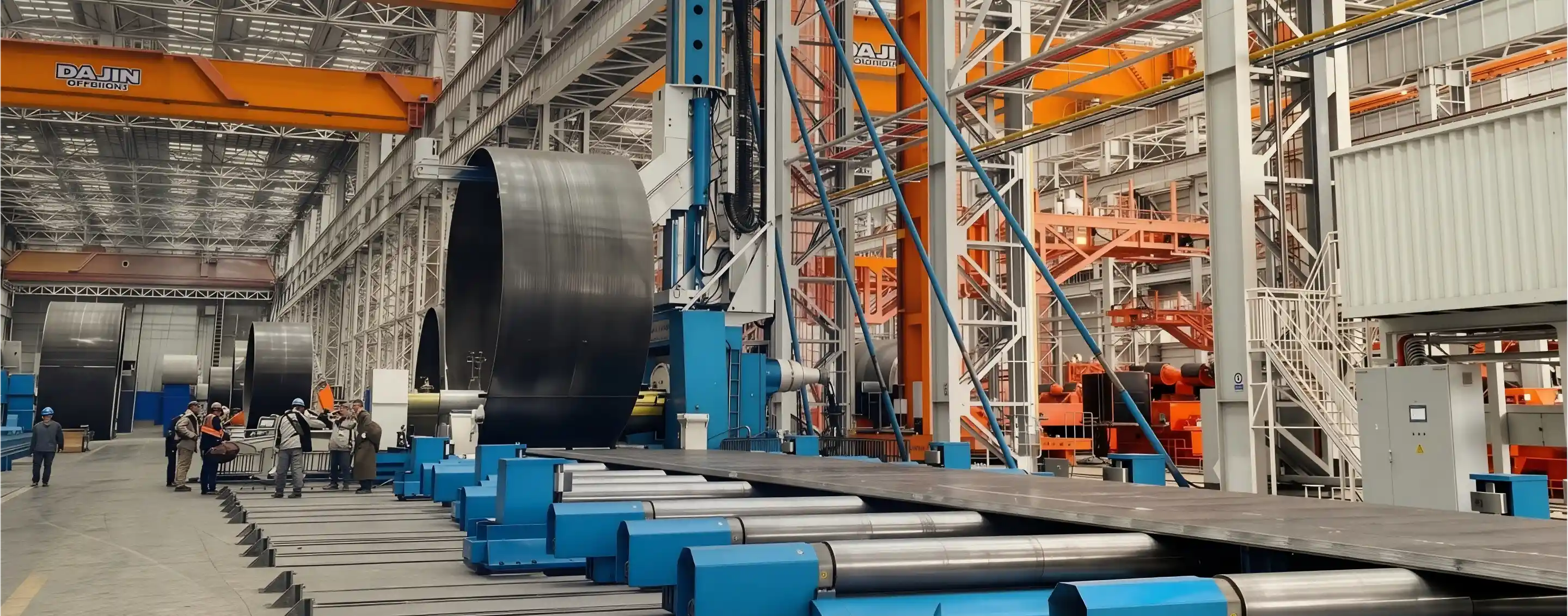
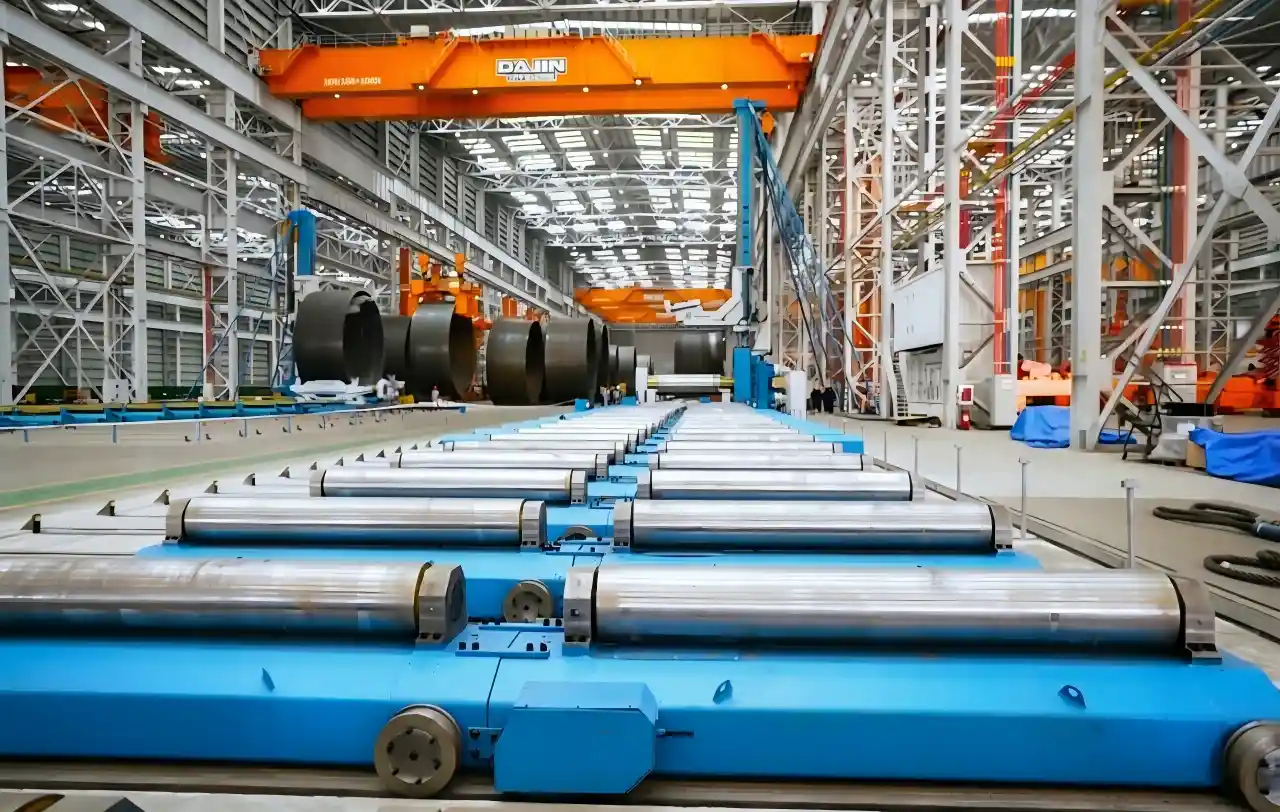
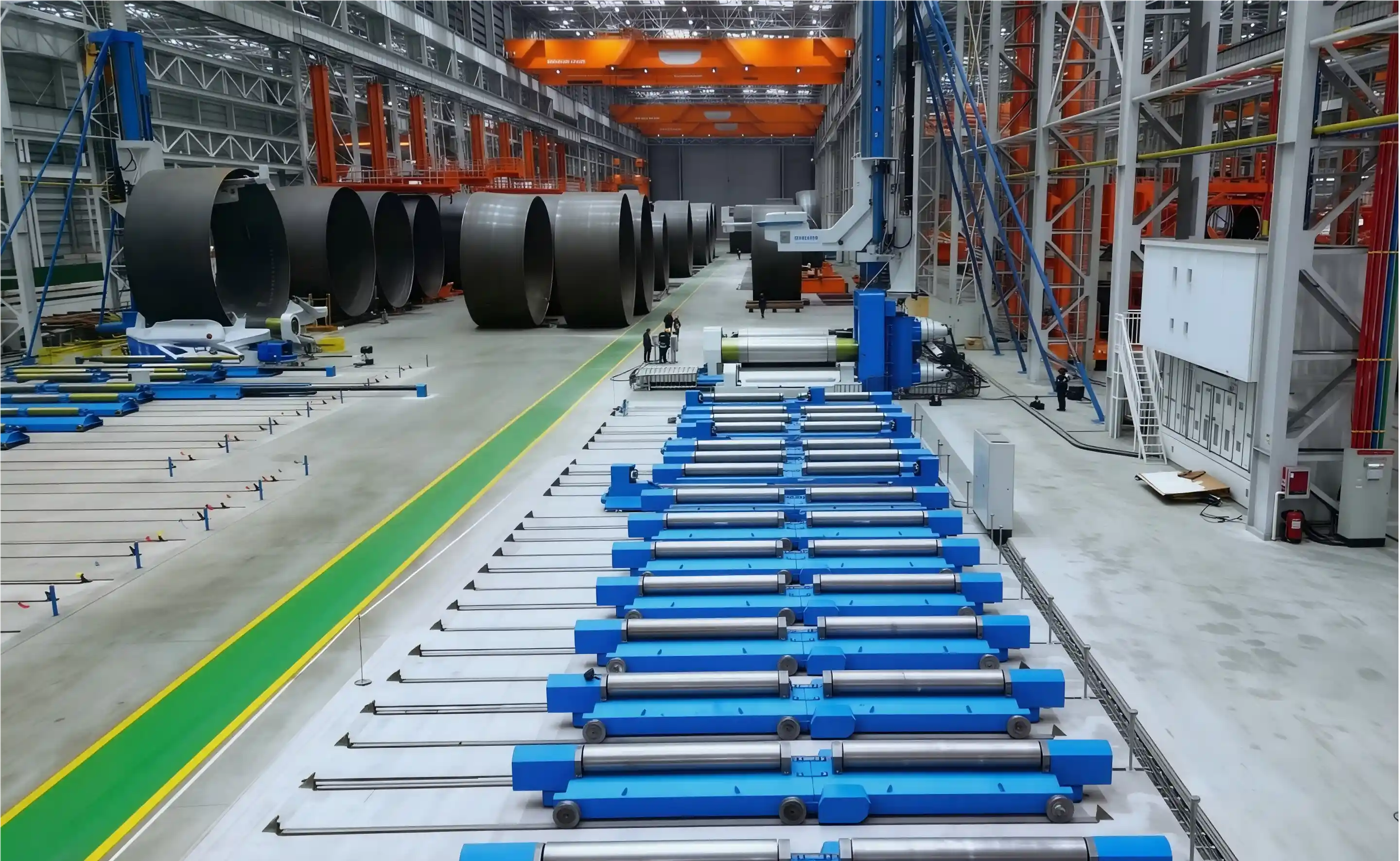
Single operator can complete one full wind tower component every 20-30 minutes (including tack-welding). Enables 2-3 shift continuous production. Industry-leading cycle time reduction drives capacity to 200+ complete towers annually per machine.
Two independent lower rollers, each with dedicated hydraulic positioning. Creates flexible geometric adaptation for both symmetrical and eccentric fan blade sections—critical for tapered tower geometry.
Upper bearing seat features integrated cone-blocking mechanism. Achieves 30° standard cone angles with load capacity at 50% machine rating. Eliminates need for separate cone-rolling equipment, reducing floor space 35%.
Real-time multi-point deflection monitoring across entire plate width. Automatic servo adjustment maintains ±2mm flatness tolerance even with 50mm thick plate loads—essential for tower base sections requiring precise flange alignment.
CNC pre-programs store all wind tower profile templates. Operator selects tower type from dropdown menu; machine auto-adjusts pressure, speed, and geometry. Eliminates manual calculation errors, reduces training time 60%.
Coordinated positioning with downstream tack-welding station. Completed component transfers directly to welding jig without re-positioning—saves 8-10 minutes per piece, improves weld seam alignment by ±1mm.
The machine employs dual hydraulic lower rollers with independent horizontal positioning. Each roller moves via dedicated proportional valve controlled by PLC algorithms specifically tuned for wind tower tapered sections.
Precision Metrics: Diameter Tolerance: ±3mm at base, ±2mm at mid-section | Cone Angle Tolerance: ±0.5° | Ovality (Out-of-Roundness): ≤1.5% of diameter
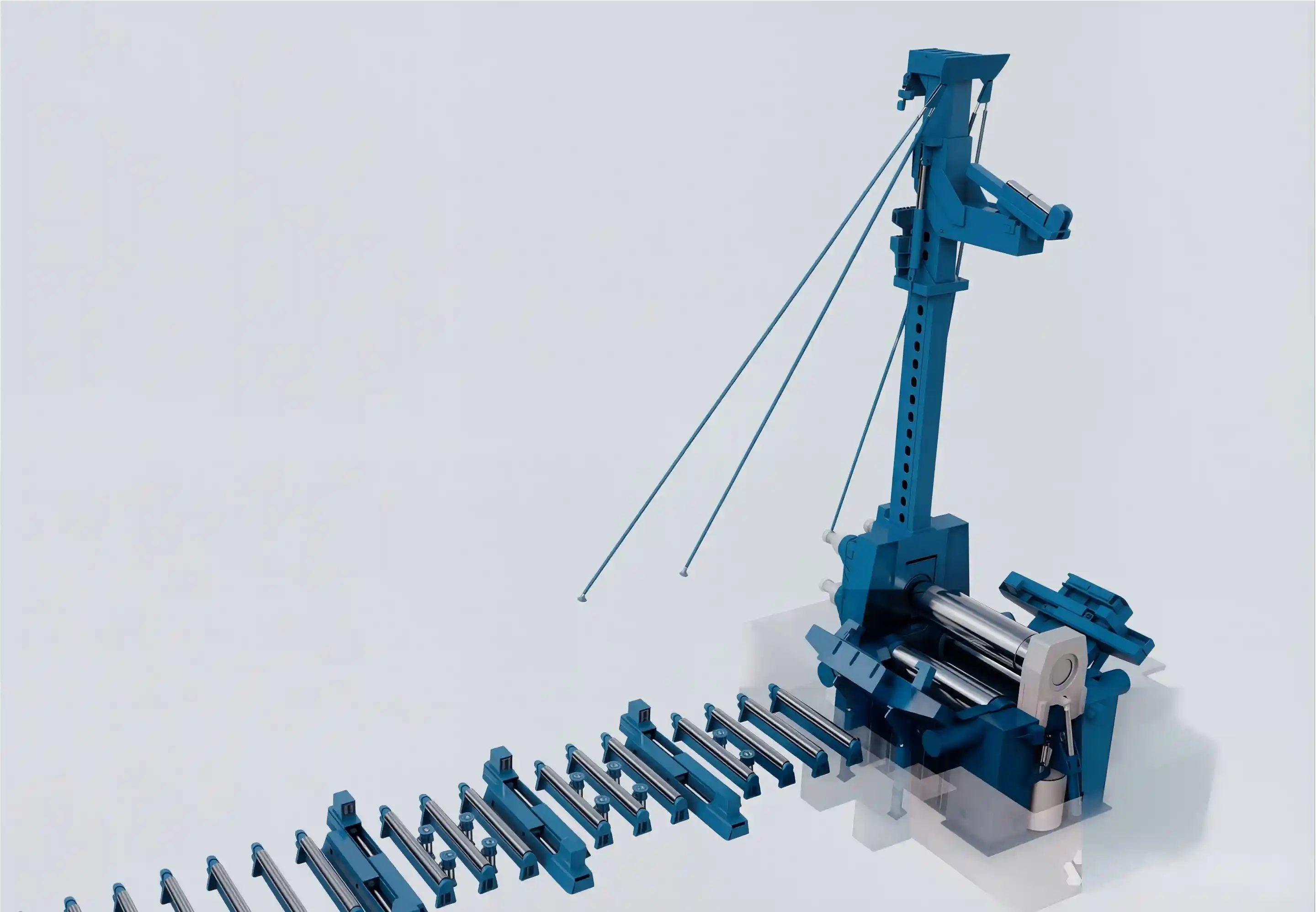
Specialized tilt mechanism on lower bearing seat accommodates eccentric rolling. Integrated tilt blocks prevent unwanted cone angle drift during high-pressure rolling.
Wind Tower Application: Enables seamless transition from cylindrical base section to tapered upper section. Small-mouth cone production without secondary equipment.
Wind tower material (Q345/Q420 high-strength steel) requires sophisticated pressure management to prevent surface defects while achieving target roundness.
Material Compatibility: Q345: 40-60 MPa | Q420: 50-75 MPa | API 5L X65: 30-50 MPa
Pre-installed database includes 50+ standardized wind tower profiles covering 1.5MW-5.0MW turbine models from major manufacturers (Vestas, GE, Siemens Gamesa, NREL standards).
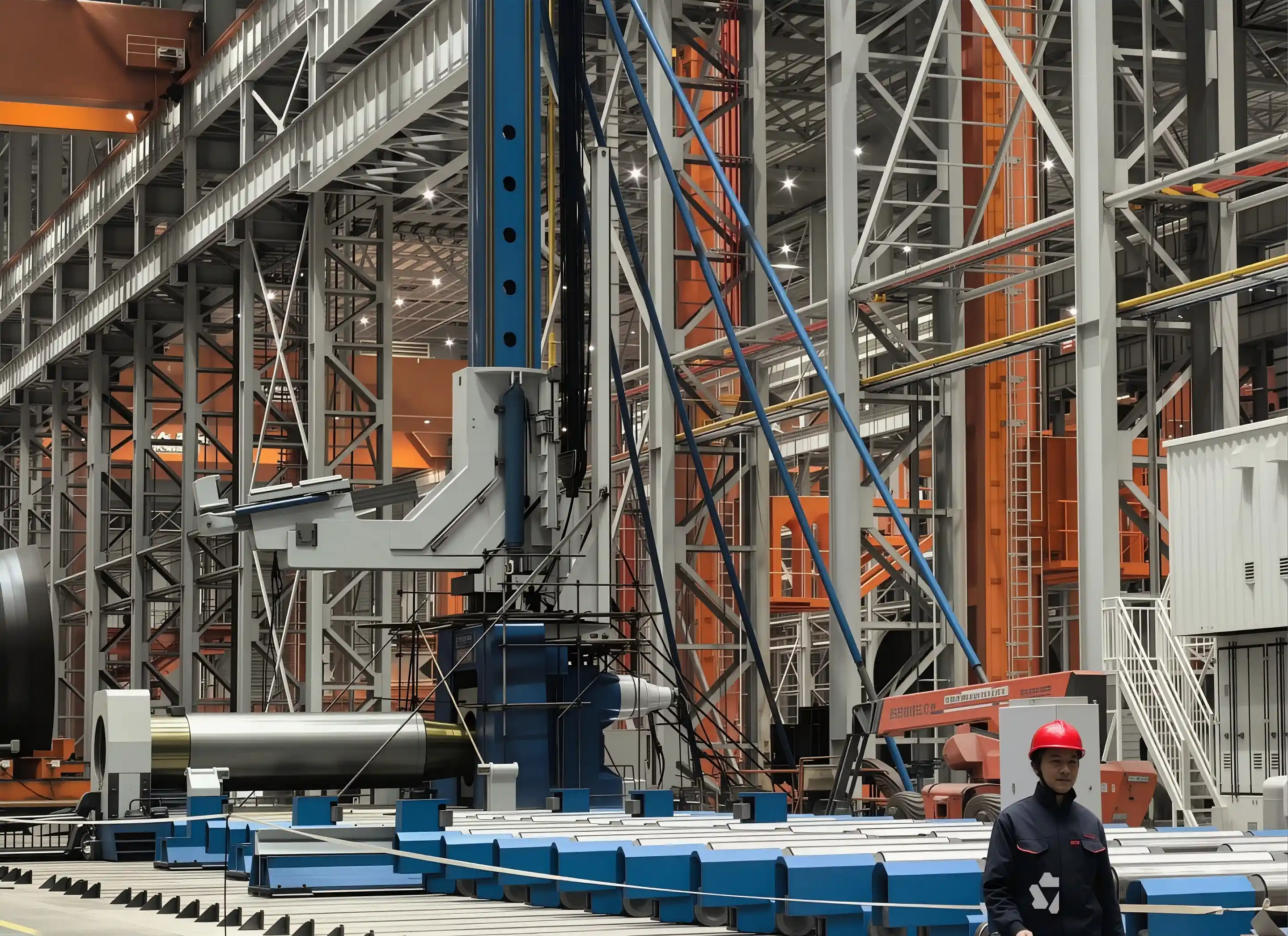
High-strength steel plates (Q345), stress-relieved design. Horizontal beam layout accommodates 3500mm plate width. Lateral deflection less than 0.5mm under full 4000T load.
42CrMo forged rollers with dual lower-roller hydraulic drive. Dedicated SAI/Parker hydraulic motors with planetary gearboxes, backlash less than 3 arc-minutes.
Swashplate variable displacement pump (80-140 cc/rev). 2×20L accumulators for rapid repositioning. Proportional valve array, pressure relief 250 bar.
Siemens S7-1200 PLC with redundant safety I/O. 7-inch color touchscreen, Chinese/English dual language. Five LVDT transducers for position feedback.
| Model | Plate Width (mm) | Thickness Range (mm) | Capacity (T) | Main Motor Power (kW) | Rolling Speed (m/min) | Cone Angle Range | Dimensions L×W×H (mm) |
|---|---|---|---|---|---|---|---|
| EZW11S-30×3500 | 3500 | 20-30 | 2500 | 37.5+15 | 2.0-4.5 | 15-30° | 6200×3500×2800 |
| EZW11S-40×3500 | 3500 | 25-40 | 3500 | 48+18.5 | 1.8-4.0 | 15-30° | 6800×3500×2900 |
| EZW11S-50×3500 | 3500 | 30-50 | 4500 | 52+22 | 1.5-3.5 | 15-35° | 7200×3500×3200 |
| EZW11X-60×3500 | 3500 | 40-60 | 6000 | 60+30 | 1.2-3.0 | 20-40° | 7800×3700×3500 |
Answer a few quick questions to help us recommend the most suitable plate bending machine for your application.
Q345, Q420 high-strength wind-grade steel. 20-50mm thickness, 3500-4500mm diameter. Critical requirement: Base flange diameter accuracy ±3mm.
Q345, Q420 material. 15-40mm thickness, 2800-3500mm diameter. Critical requirement: Ovality ≤1.5%, seam alignment ±2mm.
Q345, Q420, 16Mn material. 12-35mm thickness, 15-30° cone angle. Critical requirement: Consistent cone angle ±0.5°.
Q345, Q420 material. 8-20mm thickness, 2500-4000mm diameter. Critical requirement: Roundness ±1mm tolerance.
Q345 + composite wrapping. 15-30mm steel thickness, 2000-3500mm diameter. Critical requirement: Surface finish for composite bonding.
Q345, 16Mn high-strength bolt-hole material. 25-50mm thickness, 3000-4200mm diameter. Critical requirement: Flange surface flatness ±2mm.
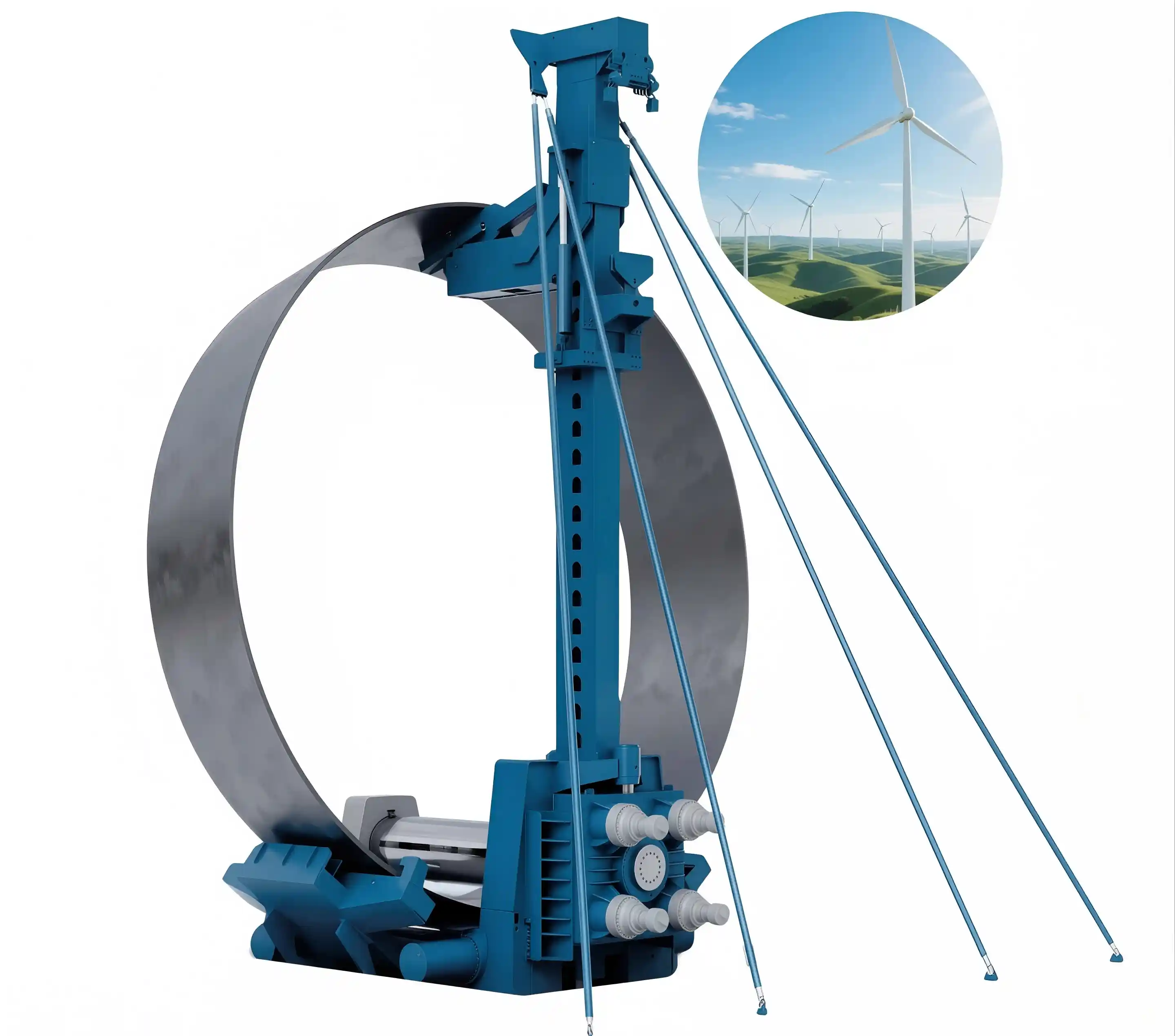
Challenge: Previous fixed-geometry machines required 45-minute tool changeover. Production bottleneck at 120 towers/year vs. 180+ demand.
Solution: Deployed EZW11S-50×3500 with 50+ pre-programmed wind tower profiles.
Result: Achieved 210 towers/year (+75%), setup time 45 min → 2 min, rework rate 8% → 1.2%.
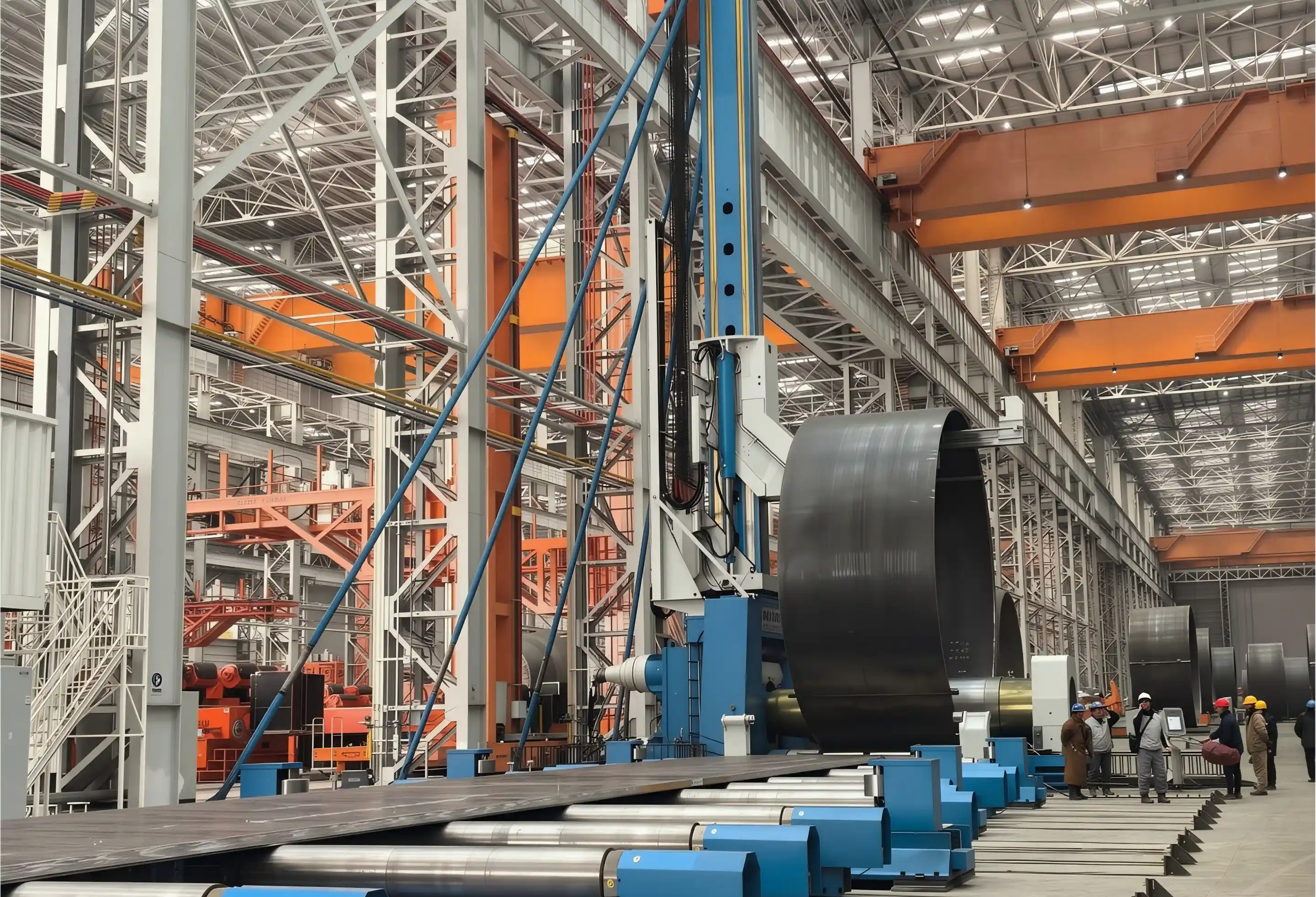
Challenge: Tapered tower sections required separate dedicated cone-rolling machine. Space constraints limited production to 150 towers/year.
Solution: Installed EZW11X-60×3500 with integrated cone-tilt system.
Result: Eliminated 250m² footprint, expanded to 280 towers/year, cone angle variation ±2° → ±0.3°.
Challenge: Tower suppliers juggle multiple OEM orders. Manual setup 20-30 min per changeover.
Solution: Standardized all 15 supplier factories on EZW11S-40×3500 platform with universal template library.
Result: 2-min standardized changeover, 504 additional towers/year industry-wide.
Challenge: Offshore wind tower requirements demanded ultra-tight tolerances. Previous 12% rejection rate caused project delays.
Solution: Deployed EZW11X-60×3500 with integrated laser measurement + SPC software.
Result: Rejection rate 12% → 0.3%, first-pass success 99.7%, advanced project timeline by 3 months.
Complete 3-section tower (base + mid + upper) can be rolled in approximately 5-6 hours, including 20-30 minute per-section production time plus changeover. With tack-welding integrated into line, total tower cycle time reaches 7-8 hours.
Machine stores 50+ pre-programmed tower profiles covering major OEM models (2.0-5.0MW range). Operator selects from HMI dropdown; CNC auto-calculates center distance, pressure, speed, and cone angle. Customization of new profiles takes less than 10 minutes.
Standard capability is 15-30° cone angles at full machine rating. Extended range up to 40-50° possible at 50% load capacity. Larger angles require secondary support structure for safety compliance.
±5% flow balance between rollers is automatically maintained via flow divider valve. Pressure sensors monitor each independently; PLC alarm triggers if deviation exceeds ±50 bar. This precision ensures ovality stays within 1.5% tolerance for 3500mm diameter sections.
Yes, machine rolls the flange ring. Bolt hole drilling/threading is performed downstream on CNC machining center—outside scope of rolling. Machine ensures flange surface flatness ±2mm, which is critical for drilling accuracy.
Primary: Q345, Q420 (wind-grade high-strength steel). Also compatible with 16Mn, A36, API 5L X65. Machine automatically adjusts pressure profile based on material hardness selection on HMI.
CNC programs store the transition diameter; machine gradually tilts the upper roller as rolling progresses. Operator selects "cone start point" (e.g., at 2000mm rolled length); servo gradually increases tilt angle from 0° to target over next 500mm, creating smooth transition.
Standard integration: automated tack-welding station (seam tracker accepts ±2mm positioning tolerance). Optional: laser measurement system feeds diameter/ovality data to MES; in-line bore polishing station for internal flange smoothing.
250-300 operating hours (typically 6-8 weeks at 2-3 shift production). Service includes: hydraulic oil & filter change, bearing re-lubrication, pressure valve calibration, seal kit inspection. Full PM takes 10-12 hours.
Standard configuration is cold rolling (50°C ambient max). Hot rolling variant available for specialized applications. Temperature rating: rollers operate to 100°C continuous (for warm rolling at 60-80°C). Contact EZHONG engineering for hot-rolling specifications above 150°C.
Yes. Ethernet/RS-485 connection enabled. Standard data exported: tower model, material, thickness, time, operator ID, pressure curve, diameter measurements, pass/fail status. Integration engineering typically 1-2 weeks.
2-day on-site training covers: machine startup/shutdown, HMI operation, profile selection, basic troubleshooting, preventive maintenance. Certified operators can independently roll 95% of standard tower profiles within week 2.
Yes. Optional cloud monitoring package. Real-time pressure, temperature, cycle time data streamed to EZHONG service portal. Predictive alerts issued 2-4 weeks before component failures (85% accuracy). Remote troubleshooting reduces average downtime 60%.
| Accessory | Lead Time | Function | Wind Tower Specific Value |
|---|---|---|---|
| Integrated Tack-Welding Station | 12 weeks | Automated seam tack-weld directly after rolling | Eliminates manual tacking; -45 min per tower; seam alignment ±1mm |
| Laser In-Line Measurement System | 10 weeks | Real-time diameter & ovality feedback during rolling | Catches defects mid-production; enables automatic pressure correction; 98% first-pass quality |
| SPC (Statistical Process Control) Software | 6 weeks | Tracks quality metrics; generates trend reports | Enables predictive adjustments; reduces rework 70%; generates quality certificates |
| Automatic Plate Loading Deck | 8 weeks | Motor-driven feed with auto-positioning ±5mm | -30 min manual handling per 8-hour shift; reduces operator fatigue |
| Tower Section Transfer Conveyor | 10 weeks | Motorized conveyor links roller to tack-welding station | Eliminates manual section movement; prevents damage |
| Profile Template Library Expansion | 4 weeks | Additional 30+ profiles beyond standard 50 | Supports regional OEM models, retrofit applications |
| Dual-Output CNC Controller | 8 weeks | Controls both rolling machine + downstream welding robot | Synchronized production; auto-triggers welding robot start |
| Mobile Crane Integration Jig | 6 weeks | Standardized lifting lugs for completed tower sections | -5 min manual rigging per section; enables automated logistics |
| Hot-Rolling Configuration Package | 10 weeks | Upgraded rollers, enhanced oil cooling, insulated covers | Enables warm/hot rolling (up to 200°C) for specialty alloys |
| Remote Diagnostics & Predictive Maintenance | 6 weeks | Cloud monitoring, ML-based failure prediction | Prevents 80% unplanned downtime; proactive component replacement |