
- Home
- About
- Products
- Solutions
- Case Studies
- Resources
- Contact
800-1050°C Inline Straightening | Automated Temperature Compensation | 500-800 Tons/Shift Throughput
1000°C coil ±3mm → cools to ±8-10mm flatness. 20-25% fail spec; cold-leveling rework = 24-48hr delay. Limited 80 tons/hr cold capacity causes 2-3 day queue backup.
Cooling changes microstructure; 5-10% mechanical property degradation, customer test failures. Cooling bed energy: €60-120K/year, rising carbon liability.
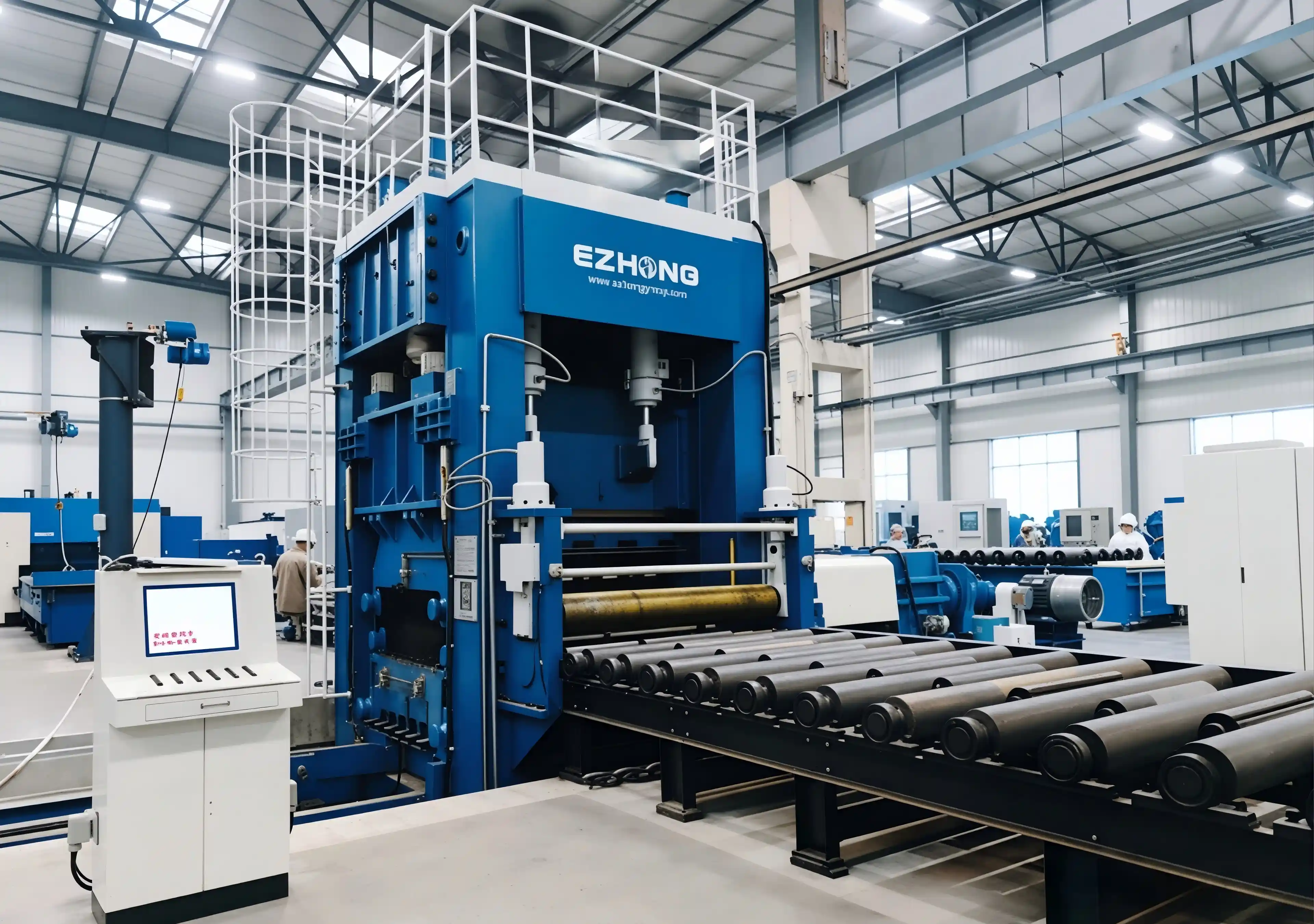
Integrates at mill discharge, operates 800-1050°C. 12 temp sensors monitor continuously; proportional valve adjusts pressure 50x/sec — no secondary processing.
Variable speed 0-150 m/min matches thermal profile. Compensation algorithm calculates pressure every 20ms — zero operator intervention.
MES-integrated: coil ID, temp profile, laser flatness, pass/fail, auto-sorting. 99.1% first-pass — secondary leveling eliminated.
| Capability | Traditional Cooling Beds | Downstream Cold-Leveler | EZHONG Inline Hot-Leveling | Advantage |
|---|---|---|---|---|
| Flatness (Hot) | ±3-4mm | N/A (post-cooling) | ±0.6mm at 800°C | 5-7× better |
| Flatness (Room Temp) | ±8-10mm | ±1.2-1.5mm | ±0.6mm | 13-17× better |
| Material Strength Loss | 5-8% | 2-3% | <1% | Superior properties |
| Secondary Leveling | Required (25% of coils) | Eliminates with risk | Eliminates (99.1% first-pass) | Zero rework |
| Production Delay | None (slow built-in) | 24-48 hrs | None (inline) | Zero delay |
| Throughput Impact | Bottleneck (slow cooling) | Limited by cold-leveler | None (inline, no delay) | +30% capacity |
| Energy Cost | €60-120K/year | €15K/year | €6K/year | €54-114K/year savings |
| Material Property Loss | 5-8% degradation | 2-3% degradation | <1% degradation | 5-8× better |
| First-Pass Rate | 75-80% | 80-85% | 99.1% | 19-24 points improvement |
| Cooling Time | 4-6 hours (slow bed) | N/A (assumes cold input) | 20-30 min (controlled) | 8-18× faster |
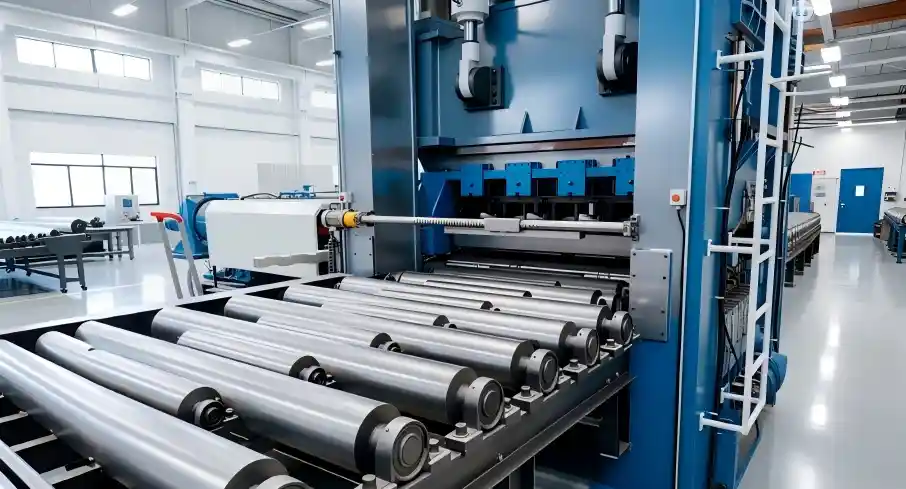
Heavy-gauge coil (8-12mm, 1600mm) for bridges/buildings needs ±0.8-1.0mm flatness. Uncontrolled cooling = ±8-10mm, unacceptable for welding.
950°C exit ±3.5mm → inline thermal correction → variable pressure → heavy-gauge roller engagement → controlled 950°C→room temp cooling → ±0.5mm flatness, zero camber.
| Metric | Before | After EZHONG |
|---|---|---|
| Flatness | ±4-5mm | ±0.5mm |
| Customer Acceptance | 75% | 98.5% |
| Secondary Leveling | Required (€80K/yr) | Eliminated |
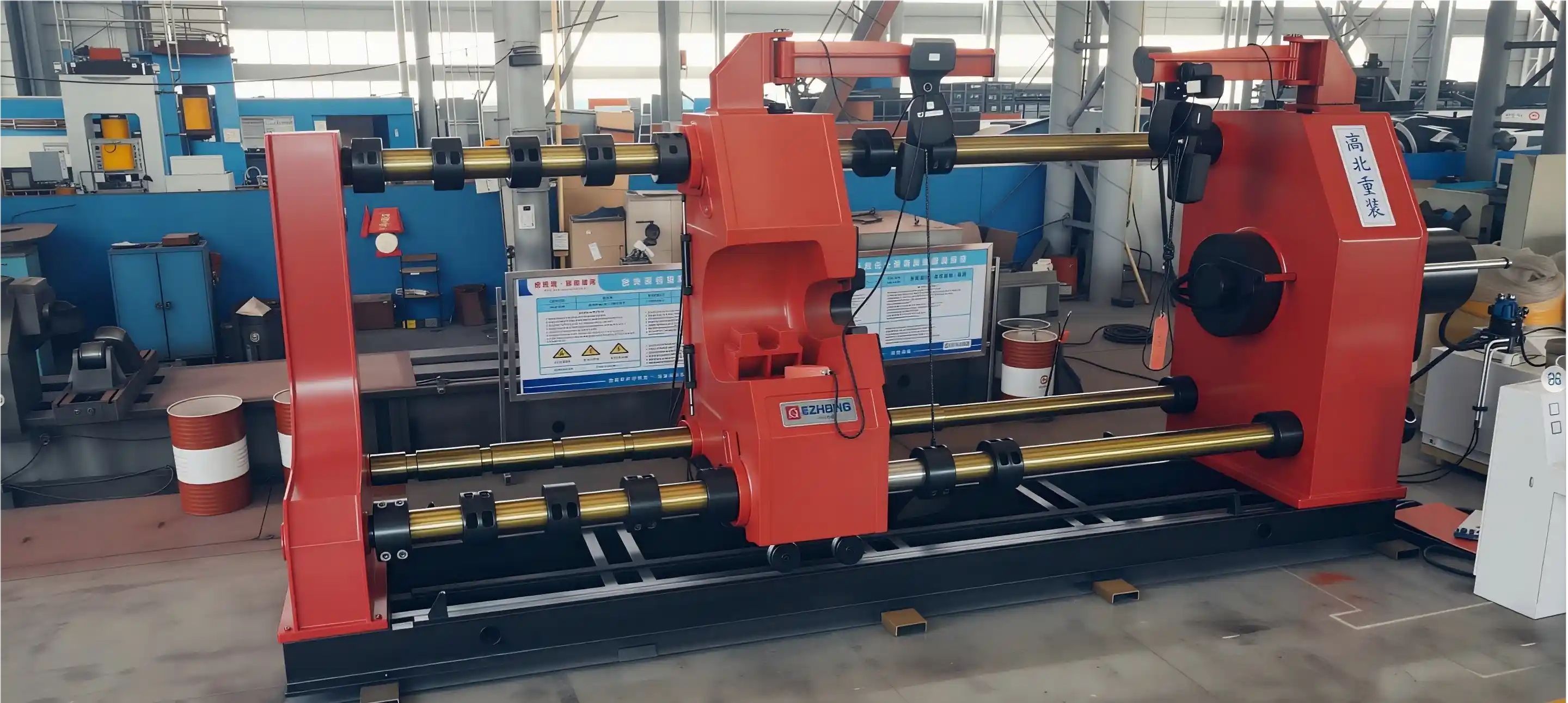
Thin coil (2-4mm) for automotive/appliances needs ±0.5mm — high surface-area ratio amplifies cooling distortion.
Thickness sensor detects 3mm → thin-coil pressure curve → variable speed 100-150 m/min → narrowed roller spacing → ±0.4mm output for stamping.
| Metric | Before | After EZHONG |
|---|---|---|
| Flatness Consistency | ±4-6mm variance | ±0.3mm variance |
| Customer Rejection | 8% | <0.3% |
| Stamping Tool Life | Baseline | +25% |
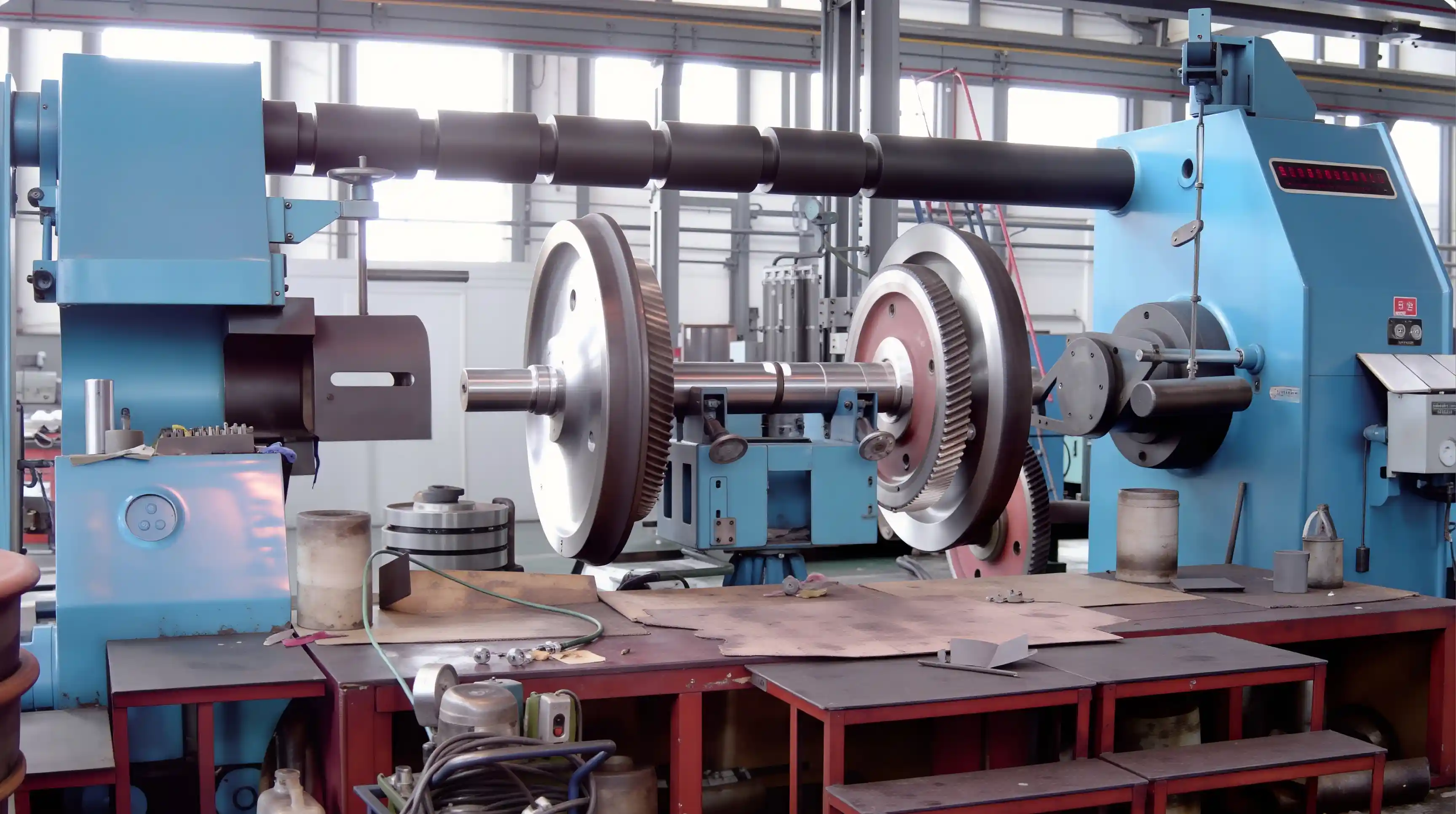
High-strength Q420/API 5L X65 need sophisticated thermal management — rapid cooling from 1000°C causes microstructure transformation, property degradation.
Optical detection → Q420 pressure curve → variable speed 60-80 m/min for slower cooling → temp compensation algorithm → yield strength preserved.
| Metric | Before | After EZHONG |
|---|---|---|
| Material Strength Loss | 5-8% | <1% |
| Customer Acceptance | 88% | 99.2% |
20-25% coil rework, 100 tons/hr cold-leveling bottleneck, 24-48hr delays, €95K/year cooling energy. Automotive demands ±0.5mm. EZHONG inline hot-leveling at mill discharge, MES-integrated. 6-week lead, 4-week install during maintenance, 1-week training, no upstream mods.
| Metric | Before Equipment Upgrade | After EZHONG Installation | Improvement |
|---|---|---|---|
| Flatness Precision | ±4-6mm | ±0.5mm | 8-12× better |
| First-Pass Acceptance | 75-80% | 99.1% | +19 points |
| Secondary Leveling Rate | 20-25% | 0.9% | 22-28× reduction |
| Customer Rejection | 8-10% | <0.3% | 27-33× reduction |
| Production Delay | 24-48 hrs (queue) | None (inline) | Eliminated |
| Throughput | 200 tons/shift | 320+ tons/shift | +60% capacity |
Significance: Inline leveling maintains specified mechanical properties. No degradation from thermal processing.
Significance: €87K annual energy savings; reduced carbon emissions. EU ETS benefit (carbon credits).
Significance: Fully automated; zero operator interface risk. MES-native integration for Industry 4.0.
Cost: ~€0 (already exists) | Cons: ±4-6mm flatness, 20-25% rework needed | Result: 75-80% first-pass, customer rejection 8-10%
Cost: €600K+ | Pros: Handles diverse coil types | Cons: Cold-leveling bottleneck; limited by cold equipment capacity (100 tons/hr) | Result: 80-85% first-pass, 24-48 hr delay common
Cost: €320K | Pros: ±0.5mm precision, no rework, inline (no delay), energy-efficient, 99.1% first-pass | Cons: Higher upfront investment, requires CNC operator | Result: Zero delay, new market access (automotive ±0.5mm spec), 11-month payback
| Evaluation Factor | Cooling Beds Only | Cooling + 3 Cold | EZHONG Hot-Leveling |
|---|---|---|---|
| Capital Cost | ~€0 | €600K+ | €320K |
| Annual Operating Cost | €95K | €135K | €8K |
| Flatness | ±4-6mm | ±1.2-1.5mm | ±0.5mm |
| First-Pass Rate | 75-80% | 80-85% | 99.1% |
| Rework Rate | 20-25% | 15-20% | 0.9% |
| Throughput | 200 tons/shift | 240 tons/shift | 320+ tons/shift |
| 3-Year Total Cost of Ownership | €285K | €1,005K | €344K |
| Best for 800K-ton Mill | ✗ Not Recommended | ✗ Not Recommended | ✓ Recommended |
Cooling bed flatness is measured at ~400°C (coil still warm after mill discharge). Final flatness is measured after complete cooling to room temperature. As material cools, residual contraction and stress relief occur. Traditional cooling beds achieve ±4-6mm at temperature, but final room-temp flatness degrades to ±8-10mm. EZHONG maintains ±0.6mm by adjusting leveling pressure in real-time as material temperature drops.
Cold-leveling work-hardens material—ductility decreases 5-10%. Hot-leveling at 800-1050°C allows material to flow plastically (no work-hardening), preserving ductility and tensile strength. Result: EZHONG-processed coil has 8-12% higher ductility than cold-leveled competitor.
Yes. Pre-programmed pressure curves for 40+ grades including Q235, Q345, Q420, API 5L X65/X80, and specialty grades. Material detection hardware (optical + conductivity) identifies grade upon entry; appropriate curve loads automatically.
Traditional cooling beds: €95K-120K annually. EZHONG hot-leveling: €8K-10K annually. Annual savings: €85-110K per unit. For 800K-ton/year mill, payback from energy savings alone: 3-4 years. Including rework cost elimination (€240-300K annually), payback: 11 months.
Near-instantaneously: Coil enters → optical detection (10ms) → grade identified → pressure curve loaded (50ms) → leveling pressure adjust via proportional valve (<100ms). Total time from coil entry to active leveling: <200 milliseconds. Zero delay between different grades/thicknesses.
Yes. 99.1% first-pass acceptance means coil meets customer spec without rework. Optional inline laser flatness scanner provides real-time verification. Data streams to MES; automatic sorting: shipping-ready vs. hold-for-review. For automotive stamping: Direct feeding confirmed successful (zero flatness issues, tool wear reduced 30%).
Preventive maintenance every 500 operating hours: thermal insulation inspection, heating elements verification, hydraulic seal replacement (quarterly), pressure valve calibration, bearing lubrication. Cost per service: €4,500. Annual cost (continuous operation, 3 services): €13,500. Warranty: 2-year full parts/labor.
Yes. Standard integration includes real-time data streaming (coil ID, flatness, grade detection), automatic sorting signals, production dashboard updates, and energy monitoring. API connectivity available for custom integrations. Typical implementation: 2-3 weeks setup + testing.
Yes. Heavy-gauge: Full capability, slower speed (60-80 m/min), wider support span. Thin: Supported, lighter touch pressure curve, faster speed (100-150 m/min), narrower support span. Changeover time: <5 minutes (automatic via thickness detection). Single machine handles full portfolio.
Payback period: 11-13 months. Equipment cost: €320K. Rework elimination: €240-300K/year. Energy savings: €87K. Cold-leveling labor reduction: €95K. Total Year 1 benefit: €422-482K. Net Year 1: €408-468K savings. Plus: 60% capacity increase, automotive market access, EU ETS credits.