
- Home
- About
- Products
- Solutions
- Case Studies
- Resources
- Contact
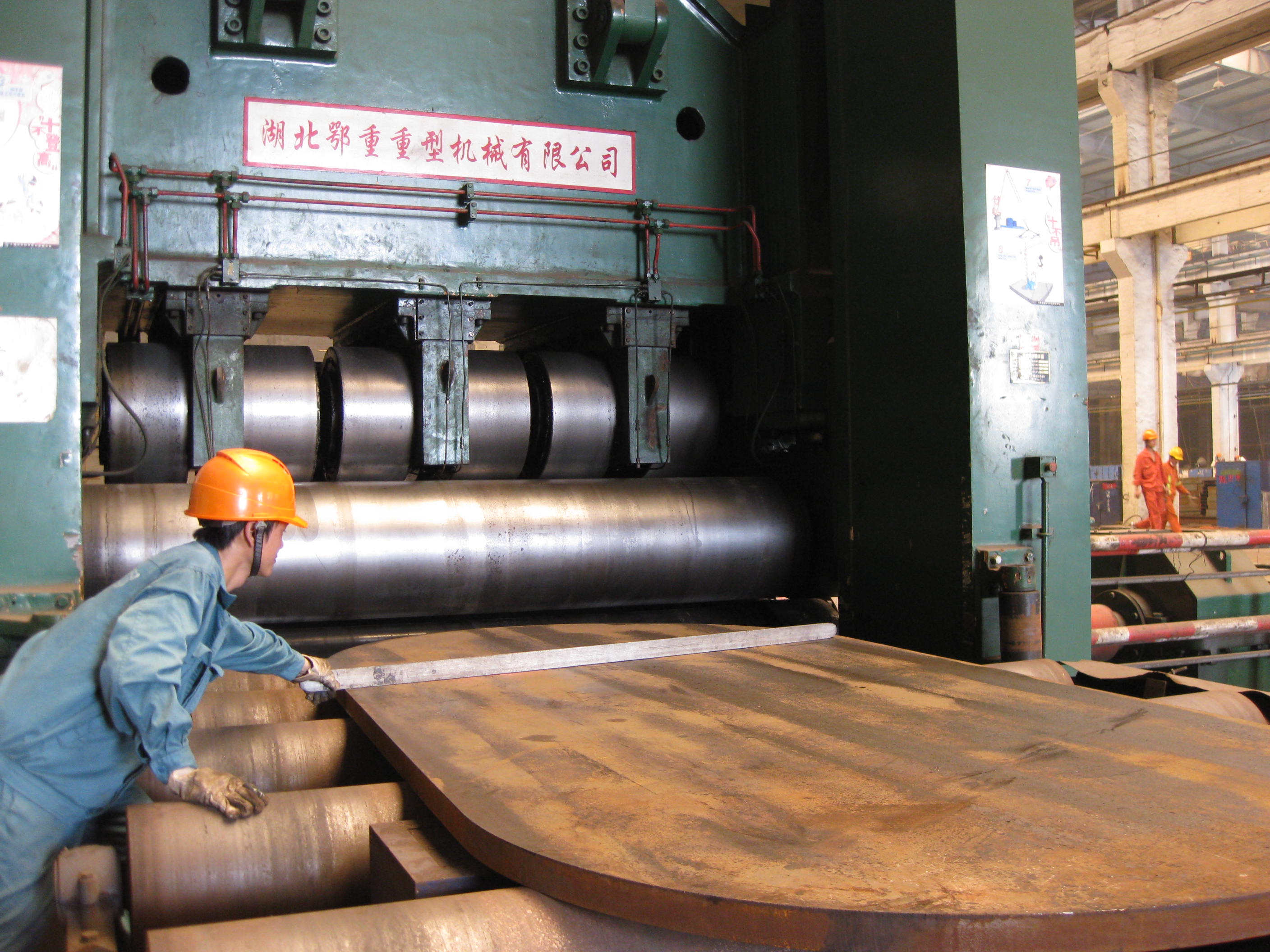
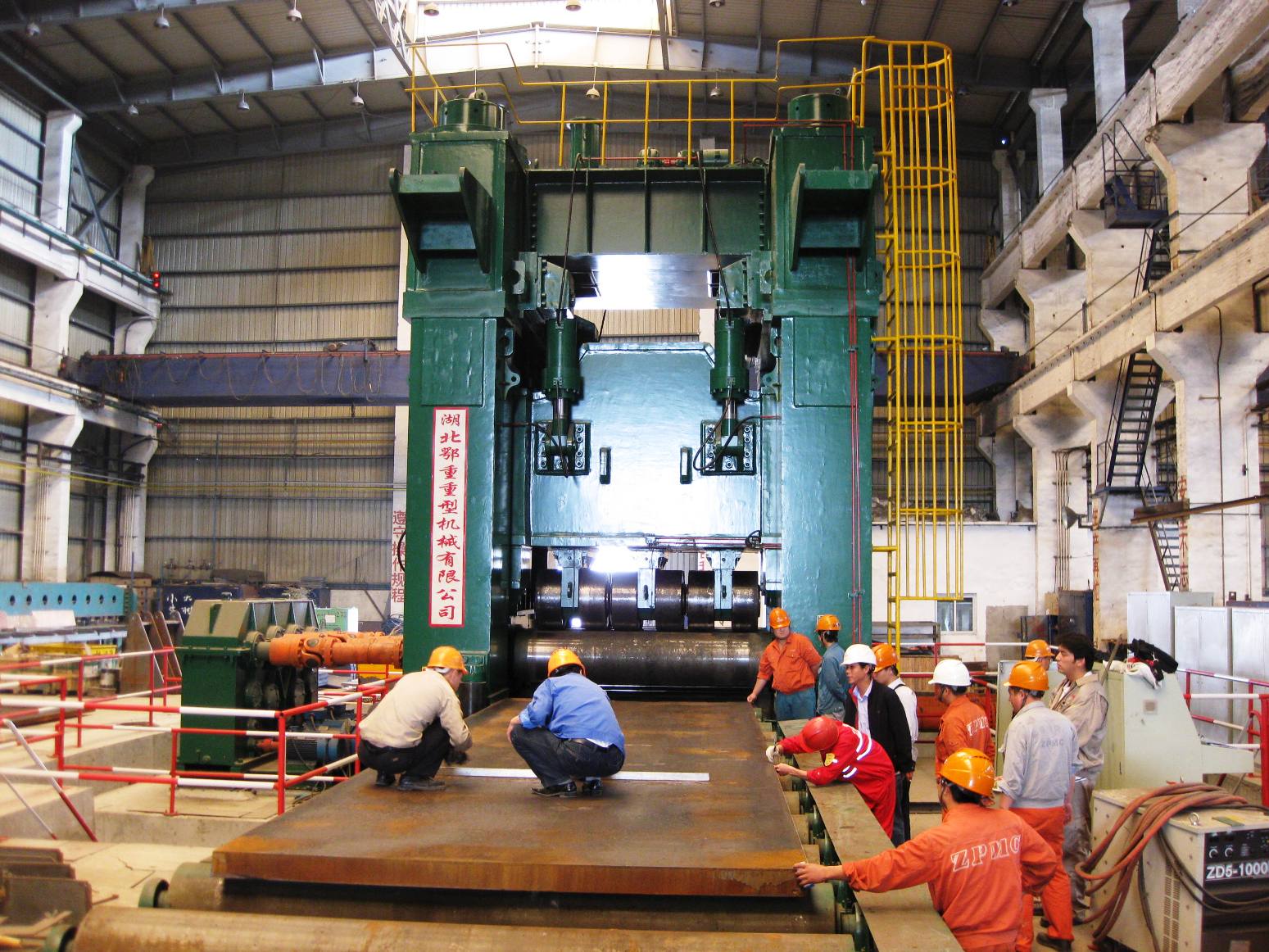
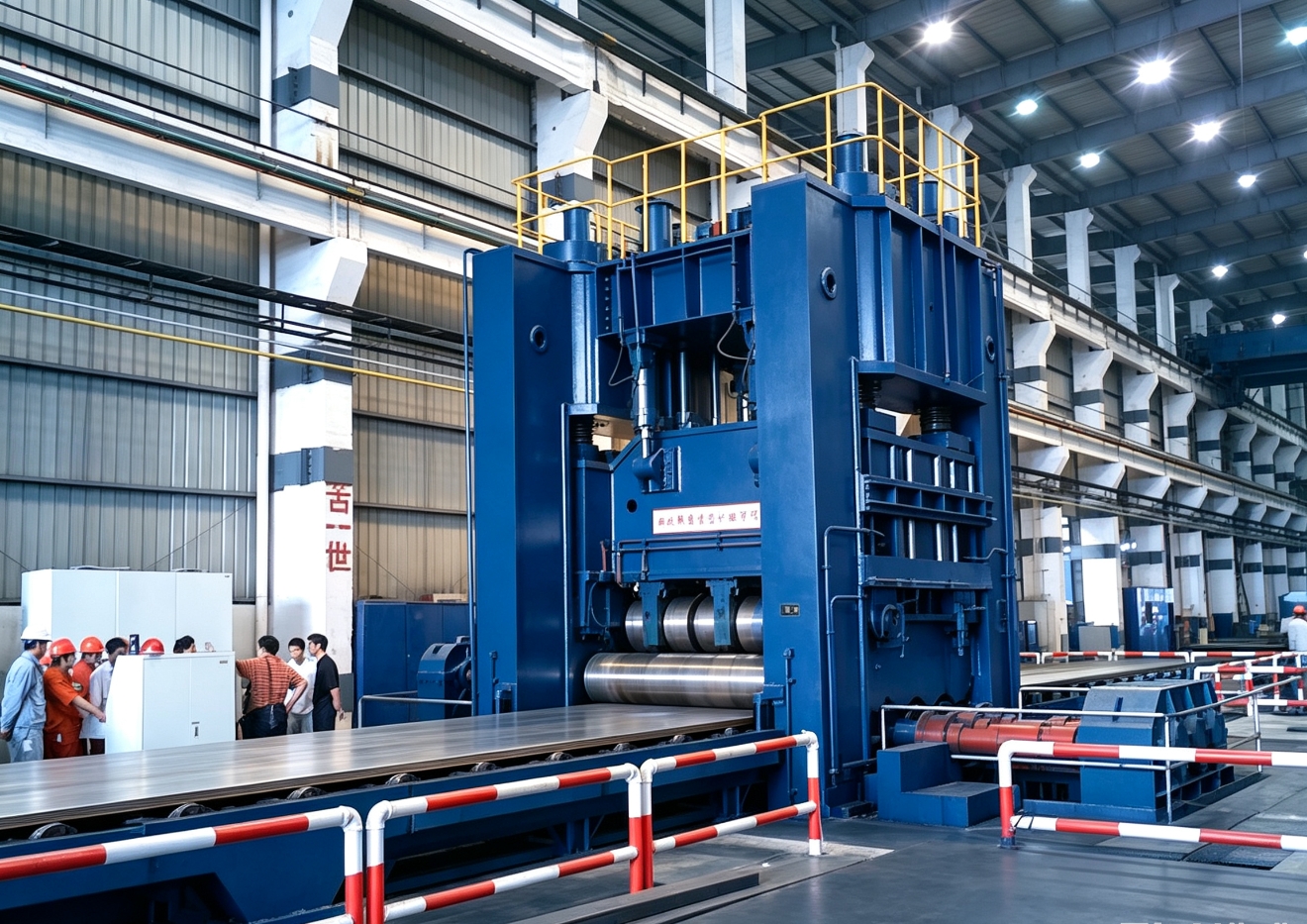
Engineered specifically for challenging mid-to-thick plate applications (40-120mm). Non-parallel roller arrangement with adjustable edge rollers enables superior stress distribution. Linear decreasing pressure-reduction technology conforms to scientific plate-leveling principles, reducing energy consumption while maximizing leveling precision.
Machine accepts material feeding from either direction. Independent adjustment of inlet end enables rapid changeover between different plate specifications without mechanical repositioning—critical for batch production environments handling mixed-size workpieces.
Each working roller driven by dedicated electric motor via planetary reducer. Flow divider valve maintains perfect load balance. Eliminates mechanical cross-shaft interference that causes uneven stress distribution and workpiece deflection.
Automatic scanning measures incoming plate thickness/width/material grade. PLC automatically calculates and adjusts roller-count in real-time. Thin plates utilize multi-roller configuration for precision; thick plates reduce roller count to increase support span—extending equipment service life while optimizing energy consumption.
Completed leveled plate sections unload via hydraulic flip-over frame. Eliminates manual lifting, reduces operator fatigue and risk, simplifies production workflow for high-volume operations.
System automatically calculates optimal inlet/outlet pressure-reduction amounts based on input parameters (plate thickness, width, material strength). Supports parameter storage and recall—enabling rapid batch processing of identical specifications without manual recalculation.
Revolutionary asymmetric design differs from traditional parallel-roller systems. Lower rollers positioned at variable angles; edge rollers independently adjustable via dedicated hydraulic cylinders. Creates flexible geometric adaptation for diverse plate curvatures and residual stress patterns.
Process Benefit: Resolves traditional equipment's plate-feeding difficulties | Achieves fuller plate deformation, reducing residual stress concentration | Minimizes "blind zones" (areas insufficiently straightened by standard equipment)
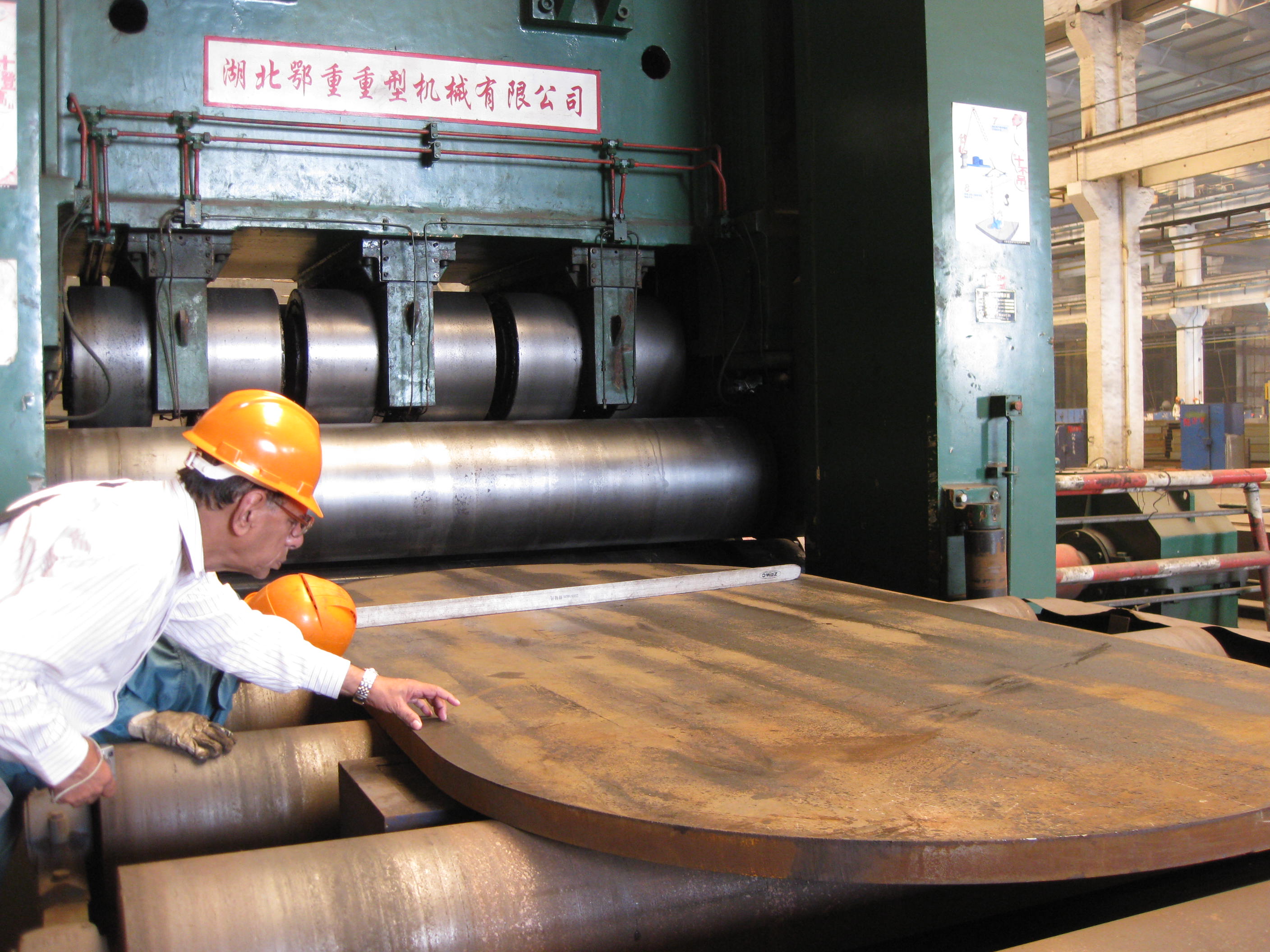
Inlet pressure set high (aggressive bending); outlet pressure progressively reduced as plate exits. Mimics scientific plate-leveling physics—material work-hardens less, stress relief improves, final straightness achieved with minimal overshoot.
Material-Specific Optimization: Carbon Steel (Q345-Q420): Standard pressure curve | High-Strength Steel (1100MPa): Enhanced pressure profile | Specialty Alloys (duplex, stainless): Custom curve per material
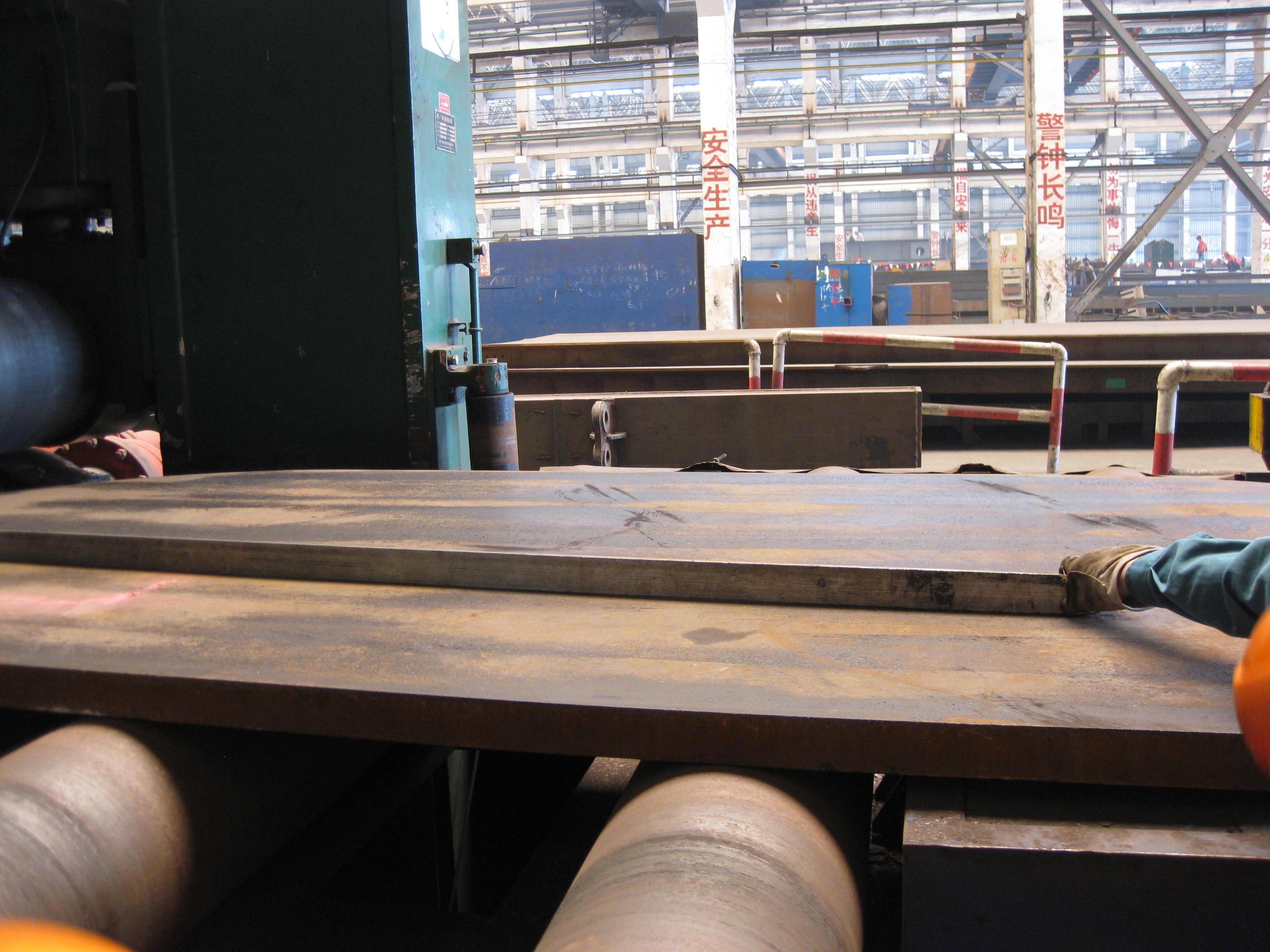
Proprietary technology allows dynamic reduction/addition of working rollers based on real-time plate analysis. Scanning module measures plate thickness/width before entry; PLC calculates optimal roller configuration.
Precision Metrics: Thin plate mode: ±0.5mm precision achievable | Thick plate mode: 3× longer bearing/roller life due to reduced operational cycles
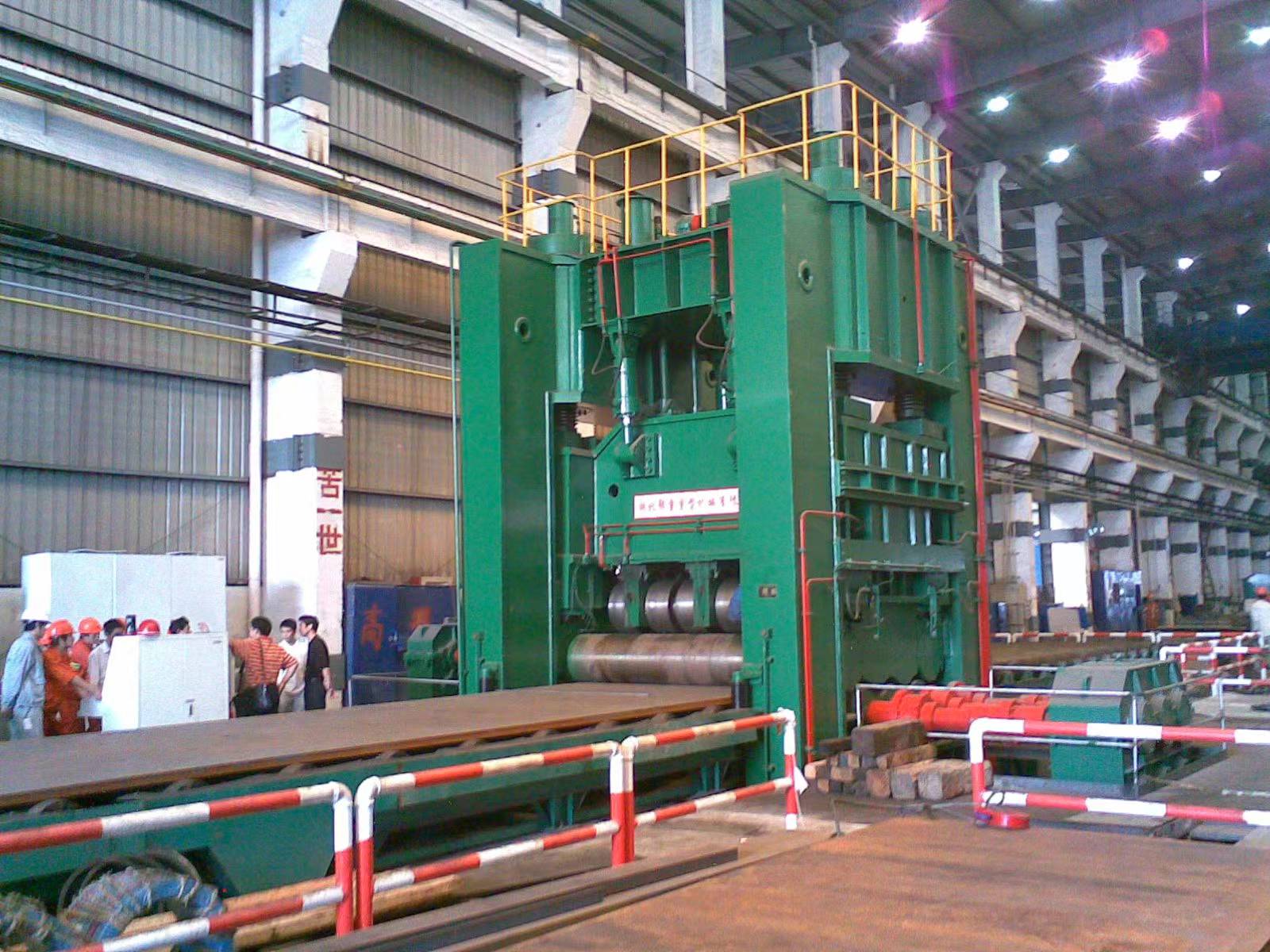
High-strength structural steel (Q355), fully stress-relieved via furnace annealing. Integrated box-section construction. Deflection <1.0mm under full 34000 kN bending load. Service life 20+ years.
42CrMo forged steel, surface hardness HRC 50-55 quenched & tempered. Diameter 280-400mm. Precision ground & polished Ra <1.0μm. Multi-motor independent drive with planetary reducers, flow divider maintains ±3% load balance.
Dual-motor synchronized drive via worm-gear reducers. Box-section steel cross-beam stress-relieved post-weld. Stroke capacity +240mm to -40mm reduction range. Precision ±2mm position repeatability.
Triple-row backup roller system with chess-board layout. 42CrMo single-side quenched depth 3.5-4.5mm. Each support roller independently adjustable via wedge mechanism. Compensates beam deflection under load.
| Model | Max Thickness (mm) | Plate Width (mm) | Yield Limit (MPa) | Working Rollers | Support Rows | Main Motor Power (kW) | Pressure Adjustment (kW) | Leveling Precision (mm/m²) | External Dimensions L×W×H (mm) |
|---|---|---|---|---|---|---|---|---|---|
| EZW43B-40×2000 | 40 | 2000 | 1100 | 11 | 3 | 45×2 | 5.5×2 | 1.0 | 5500×2400×2600 |
| EZW43B-50×2500 | 50 | 2500 | 1100 | 13 | 3 | 52×2 | 5.5×2 | 1.0 | 6100×2800×2700 |
| EZW43B-60×3000 | 60 | 3000 | 960 | 15 | 3 | 75×2 | 7.5×2 | 1.0 | 6800×3100×2900 |
| EZW43B-80×3000 | 80 | 3000 | 960 | 17 | 3 | 90×2 | 7.5×2 | 1.0 | 7200×3100×3100 |
| EZW43T-40×2200 | 40 | 2200 | 1100 | 9 | 3 | 55×2 | 5.5×2 | 0.8 | 5800×2500×2800 |
| EZW43T-60×2200 | 60 | 2200 | 1100 | 11 | 3 | 75×2 | 7.5×2 | 0.8 | 6400×2800×3000 |
| EZW43T-80×2200 | 80 | 1000 | 1100 | 13 | 3 | 90×2 | 7.5×2 | 0.8 | 6800×3000×3200 |
Excavator booms, dozer blades, truck frames | Q345, Q420 high-strength steel | Thickness 30-80mm | Straightness ±3mm; weldability preserved; no surface defects.
Main beam flange plates, box-section components | Q345, Q420 specialty alloys | Thickness 40-100mm | Curvature consistency ±2mm; internal stress relief uniform.
Heavy hull sections, strength deck plating | AH32, AH36, EH36 marine-grade steel | Thickness 50-80mm | Surface finish DNV-GL approved; ovality ≤1.5mm.
High-pressure reactor shells, boiler drums | ASTM A516 Gr.70, 16MnDR | Thickness 40-120mm | Roundness ±2mm; residual stress controlled; weld-ready.
Armor plating, tank hull sections, structural reinforcements | High-strength armor steel 1100-1300MPa | Thickness 60-120mm | Precision ±0.5mm; no micro-cracking; dimensional stability.
Stainless steel reactor components, duplex steel structures | 304/316L stainless, duplex 2205, Hastelloy | Thickness 20-80mm | Surface preservation no marring; stress relief even distribution.
Challenge: Excavator boom
components (60mm Q420 steel) showing ±4-5mm
curvature variation. Previous fixed-geometry machine
couldn't adapt to material hardness variation. Scrap
rate 6-8%; rework labor intensive.
Solution:
Deployed EZW43B-60×3000 with automatic
gap-adjustment system and variable-roller
technology.
Result:
Straightness improved from ±4-5mm → ±1.2mm
(±0.5mm/m²). Scrap Rate reduced from 6-8% → 0.8%.
Setup Time reduced from 45 min → <5 min per product
change. Annual Savings €280K material cost reduction
+ €150K labor savings.
Challenge: EH36 marine-grade steel
hull sections (80mm, variable widths). DNV-GL
flatness requirement ±1.0mm/m². Previous equipment
achieved ±1.8mm/m²; high rework rate (12%).
Solution:
Integrated EZW43T-80×2200 with precision
pressure-reduction control and edge-roller
adjustment.
Result:
Flatness Precision achieved ±0.8mm/m² (exceeds
DNV-GL requirement). First-Pass Quality improved
from 88% → 99.2%. Rework Cost reduced from
€450K/year → €35K/year. Production Capacity
increased 15%.
Challenge: Mixed-model production
(10 different boom designs, 30-80mm thickness).
Manual setup 1.5-2 hours per changeover. Operator
skill dependency high; new workers made errors.
Solution:
Deployed EZW43B-60×3000 with automatic scanning/PLC
setup system. Trained 6 operators on standard
procedures.
Result:
Setup Time reduced from 1.5-2 hours → <5 minutes.
Setup Accuracy eliminated manual errors; first-run
success rate 100%. Operator Training new workers
independent after 3-5 production runs. Asset
Utilization increased from 68% → 91%.
Challenge: 1100MPa
ultra-high-strength armor steel (80mm) with elastic
springback causing ±3mm diameter variance.
Variable-roller conventional equipment insufficient.
Required ±0.5mm precision for military
applications.
Solution: Custom
EZW43T-80×2200 configuration with enhanced
pressure-reduction capability and 3-row support
roller system.
Result:
Dimensional Tolerance achieved ±0.5mm
(military-grade precision). Residual Stress reduced
from 250 MPa → <50 MPa. Surface Quality zero
micro-cracking; passes 100% ultrasonic inspection.
Production Rate 45 plates/day (vs. previous 35
plates/day).
EZW43B (standard series) uses stress-relieved welded frame; optimal for medium-duty applications (40-60mm). EZW43T (precision series) features closed-box pre-stressed frame with higher rigidity; designed for heavy-duty applications (60-120mm) and precision-critical work. EZW43T achieves ±0.8mm/m² vs. EZW43B's ±1.0mm/m².
Before plate entry, laser/sensor scans thickness/width/material grade. PLC calculates optimal inlet/outlet pressure automatically. Motor-driven adjustment completes setup in <2 minutes (vs. manual 45-minute mechanical screw adjustment). Eliminates human error and trial-and-error tuning.
Yes. Variable roller-number technology adjusts active roller count per plate thickness. Thin plates (3-8mm) activate all 13 rollers for precision; thick plates (40-120mm) reduce to 9 rollers, increasing support span and load capacity. Single machine replaces 2-3 dedicated thin/thick equipment.
Parallel-roller machines apply uniform pressure across plate width (useful for flat sheets). Non-parallel arrangement enables independent edge-roller adjustment, accommodating curved/warped material. Asymmetric pressure distribution resolves edge-waving and center-deflection problems traditional equipment cannot address.
Yes. Database pre-programs 50+ material grades (carbon steel, stainless, duplex, specialty alloys). PLC automatically selects pressure curve based on yield-strength input. Custom curves can be created/stored for unique materials. Enables rapid material switchover without manual parameter recalculation.
Preventive maintenance recommended every 500 operating hours. Service includes: hydraulic oil & filter change, bearing re-lubrication (centralized system), pressure valve calibration, roller surface inspection. Full PM service requires 12-16 hours; can be performed during night shift without production interruption.
Machine accepts material from either direction; inlet end independently adjustable per feed direction. Eliminates need to manually reverse plate or reposition machine. In continuous production, operator can load next plate while current plate exits—reducing cycle time 20-30%.
Multiple emergency stop buttons (5 locations), optical safety sensors at inlet/outlet (light curtain protection), dual-hand enable switch (optional), pressure relief valve with auto-unload solenoid, mechanical hard limits on all moving components, protective guards on all rotating elements.
Optional IoT upgrade enables cloud connectivity. Pressure trends, motor current, bearing vibration monitored continuously. Predictive alerts issued 2-3 weeks before component failures (85% accuracy). Remote expert support available 24/7 for troubleshooting.
Average power draw 45-90 kW per operating hour (model dependent). Linear decreasing pressure-reduction technology reduces overall energy vs. traditional equipment by 25-30%. Annual energy cost for typical heavy-duty operation: €15K-25K (varies by local electricity rates).
| Accessory | Lead Time | Function | Value Proposition |
|---|---|---|---|
| Automatic Material Feeding System | 8 weeks | Motorized conveyor with auto-positioning, ±5mm accuracy | Eliminates manual loading; -40% operator labor; improves throughput |
| In-Line Flatness Measurement | 10 weeks | Laser-based measurement integrated at outlet | Real-time quality feedback; enables automatic pressure adjustment; ±0.3mm accuracy |
| SPC (Statistical Process Control) Software | 5 weeks | Tracks quality metrics, generates control charts, produces audit reports | Enables PED/ASME compliance documentation; traceability for high-end customers |
| Automatic Edge-Roller Leveling System | 6 weeks | Servo-driven edge-roller tilt with pressure feedback | Eliminates manual edge adjustment; auto-corrects wave distortions; ±1mm precision |
| Hot Leveling Configuration | 12 weeks | Enhanced rollers, cooling system, thermal insulation | Enables warm/hot leveling (up to 200°C) for specialty heat-treat alloys |
| Remote Diagnostics & Predictive Maintenance | 6 weeks (subscription €12K/year) | Cloud monitoring, ML-based failure alerts, mobile dashboard | Prevents 80% unplanned downtime; extends component life 20% |
| Integrated Downstream Marking System | 7 weeks | Pneumatic marking tool synchronizes with plate exit | Automatic part identification; integrates with MES tracking |
| Custom Pressure-Curve Database Expansion | 4 weeks | Engineering consultation + 20 new material profiles | Accelerates setup for new materials; reduces trial-and-error time |
| Hydraulic Oil Conditioning Unit | 5 weeks | Offline filtration + water removal + temperature control | Extends hydraulic fluid life 2.5×; maintains 45-55°C optimal operation |
| Marine-Grade Corrosion Protection | 4 weeks | Salt-spray resistant coatings, stainless fasteners, sealed bearings | Critical for coastal/offshore manufacturing environments |