
- Home
- About
- Products
- Solutions
- Case Studies
- Resources
- Contact
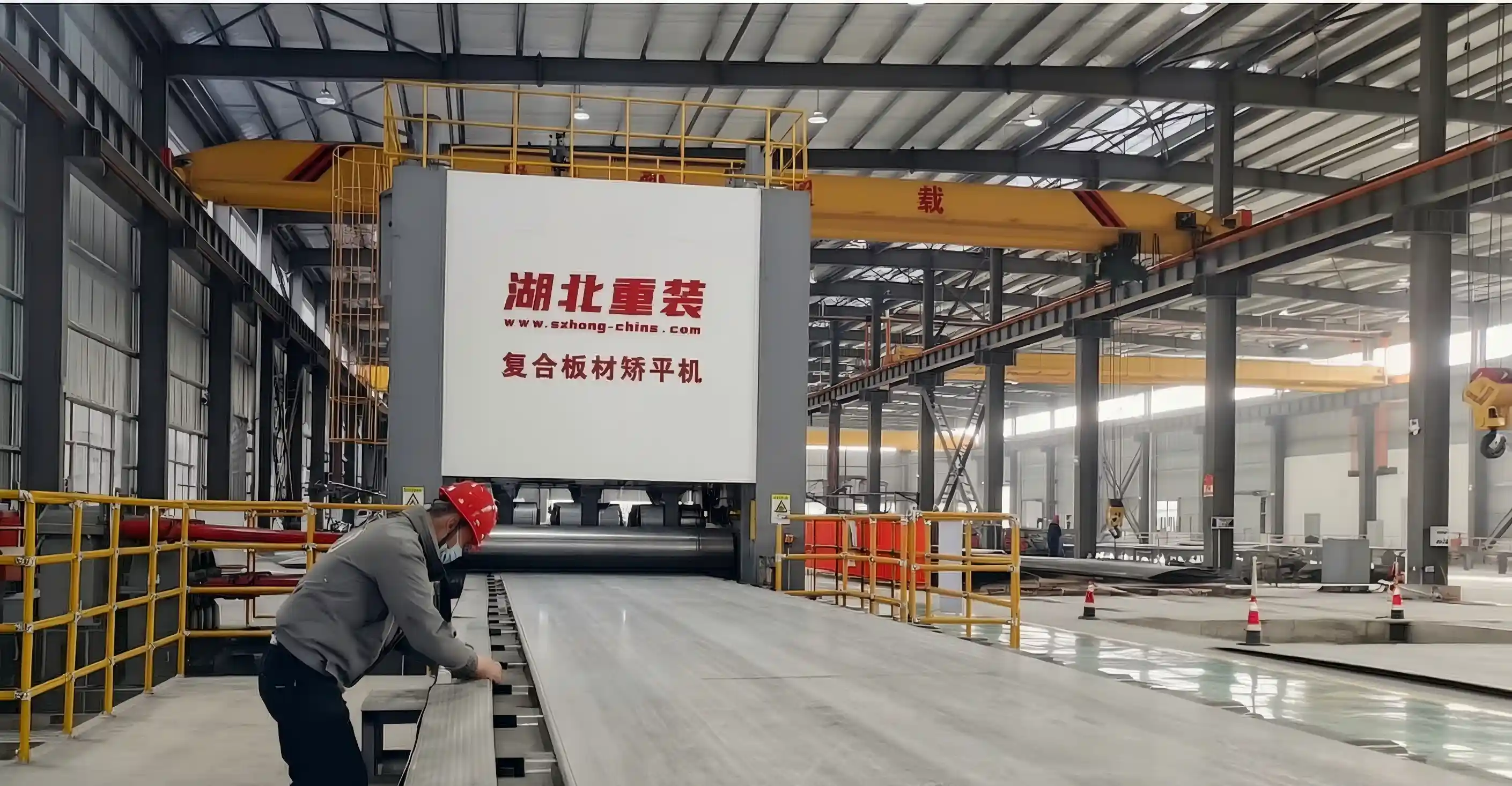
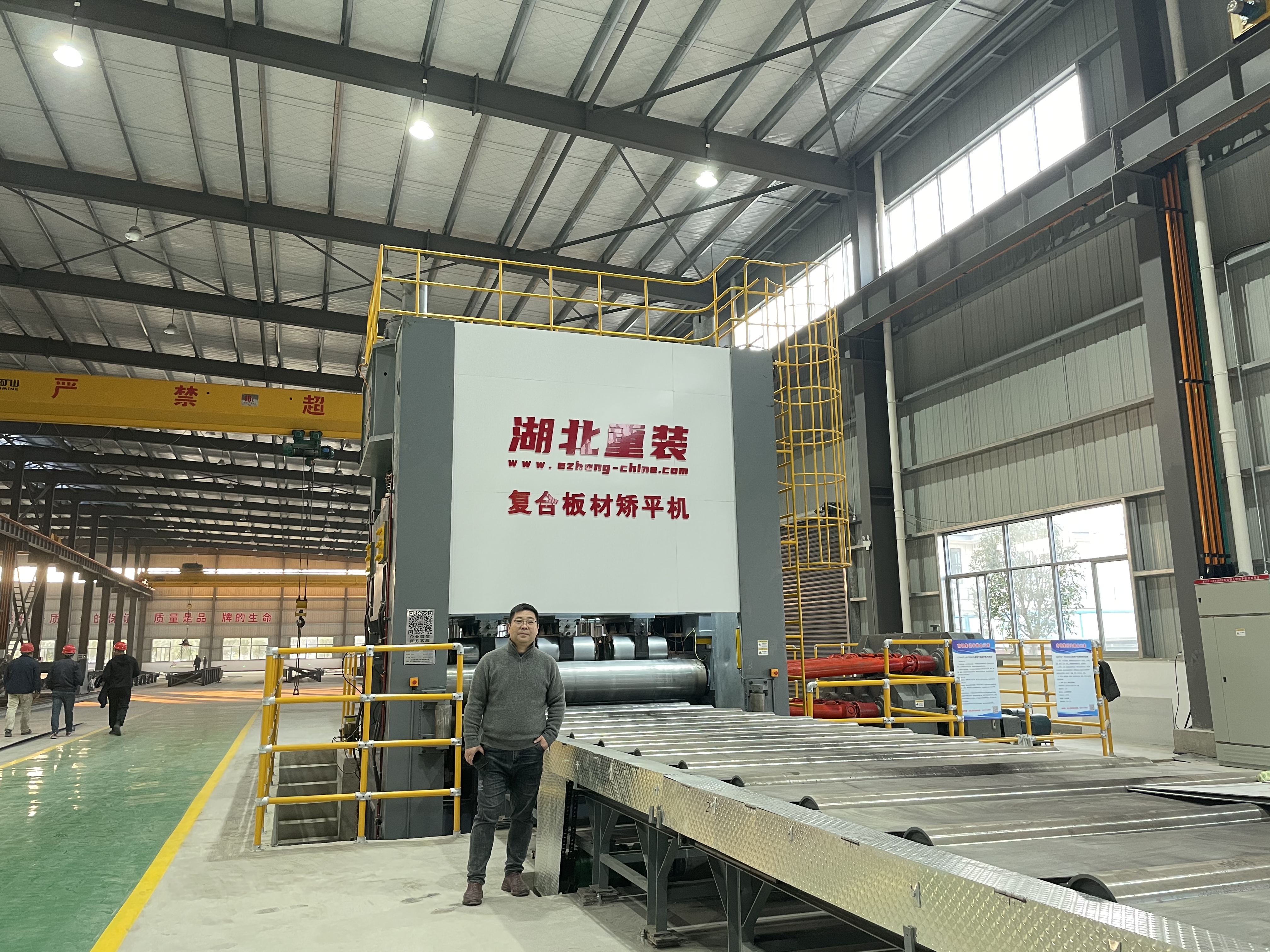
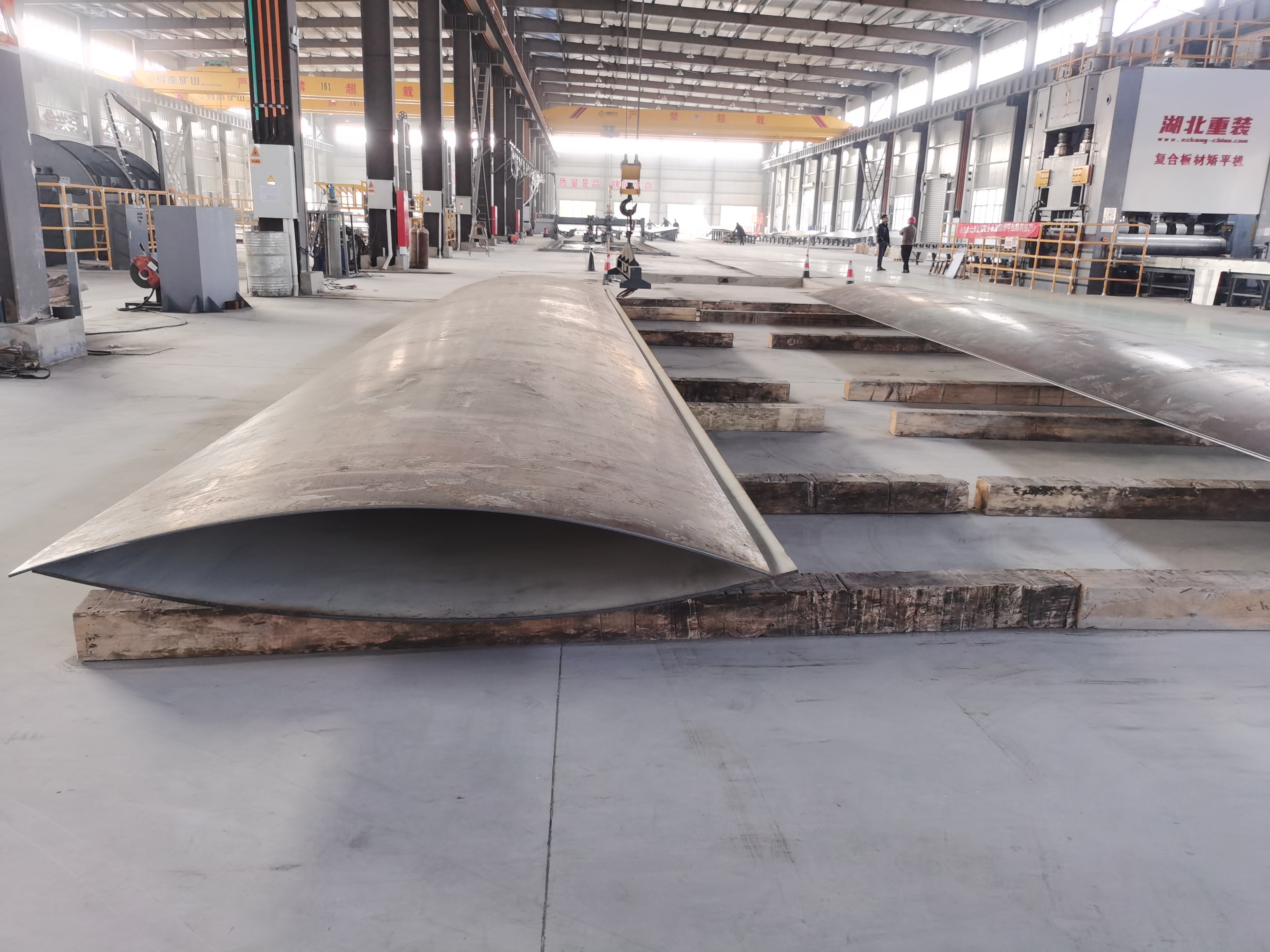
Designed to overcome critical challenge: composite plates generate extreme stress concentration at bonding interface during bending. Independent roller drive + edge roller adjustment eliminate uneven pressure distribution. Prevents delamination (separation of clad layer from base steel)—the primary failure mode in traditional equipment.
Each working roller independently driven by dedicated hydraulic motor. Flow divider maintains perfect load balance. Eliminates mechanical cross-shaft interference that causes asymmetric loading—critical because composite materials have directional weakness at bond interface.
Both upper and lower edge rollers independently adjustable via proportional hydraulic cylinders. Creates symmetric stress distribution across plate width. Prevents edge-concentration stress that typically causes peripheral delamination in composite plates.
Proprietary inlet/outlet pressure profile minimizes stress concentration at clad-steel interface. Gradual pressure reduction allows controlled material flow without shock loading. Reduces bond-line stress 40% vs. traditional equipment.
Integrated ultrasonic sensor array monitors bond-line acoustic properties during leveling. Detects micro-delamination initiation before visible failure. Enables automatic pressure reduction if delamination risk detected.
Work rollers feature proprietary low-friction surface coating (ceramic or polymer). Prevents scuffing/marring of premium clad surfaces (stainless steel, nickel). Preserves corrosion-resistance properties of expensive clad layer.
Revolutionary design addresses fundamental challenge: composite plates have directional weakness at bonding interface. Traditional single-drive cross-shaft creates torque ripple—devastating for composites. Each roller independently driven by dedicated SAI hydraulic motor eliminates torque ripple entirely.
Composite Material Benefit: Bond-line stress uniform distribution; prevents stress concentration peaks that initiate delamination; enables processing of thicker composite plates (20-25mm) previously impossible.
Composite plates require fundamentally different bending strategy than monolithic steel. High inlet pressure causes sudden stress spike at bonding interface (weak point). Proprietary curve uses gradual pressure reduction—allowing composite material to "flow" plastically without shock loading.
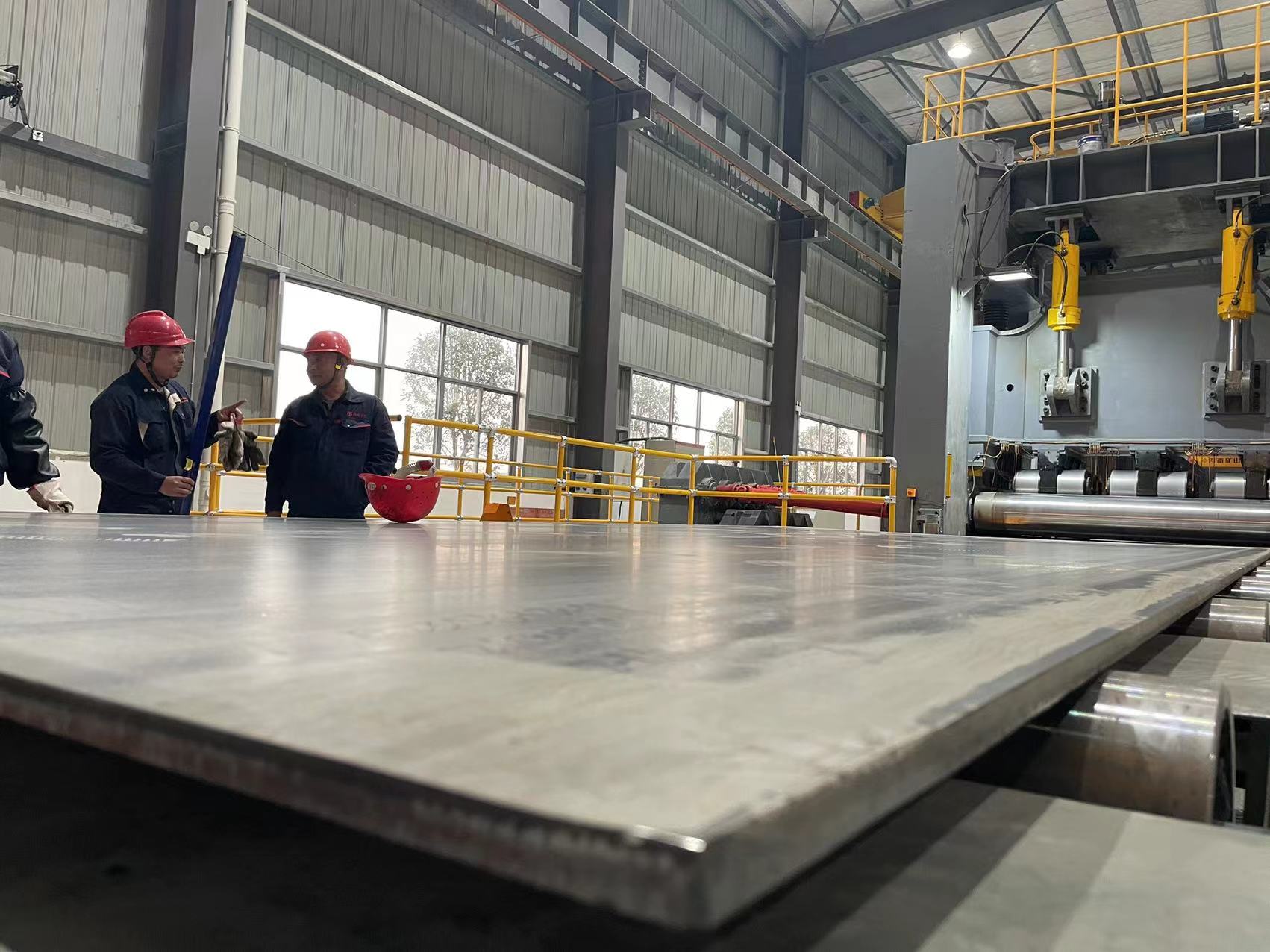
Composite plates prone to peripheral delamination due to edge-effect stress concentration. Dual independent edge roller cylinders enable asymmetric pressure adjustment—creating symmetric stress field across entire plate width.
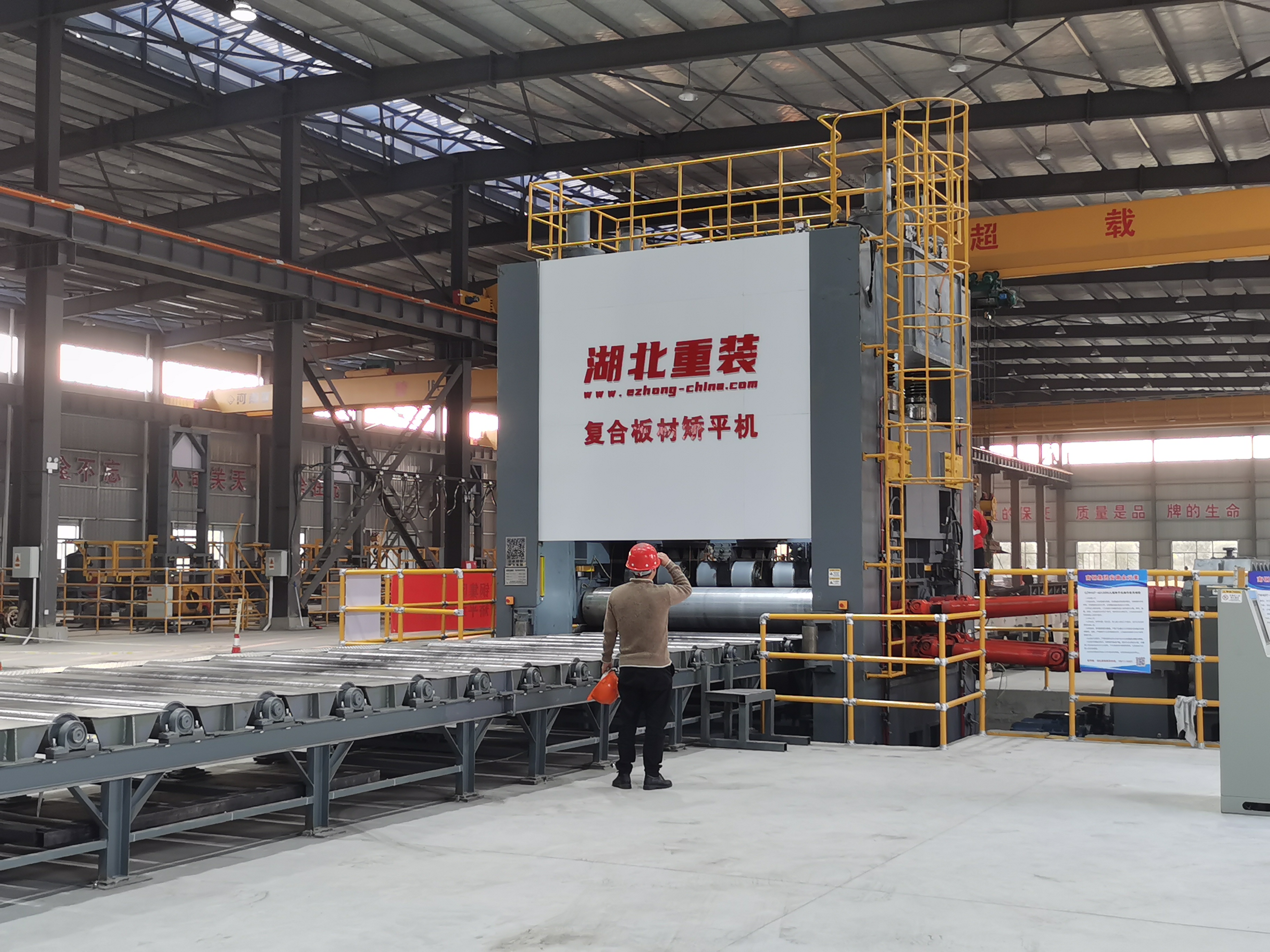
Integrated ultrasonic sensor array mounted on roller frame continuously monitors acoustic properties of bond-line during leveling. Detects micro-delamination initiation (acoustic signature changes) 2-3 minutes before visual appearance.
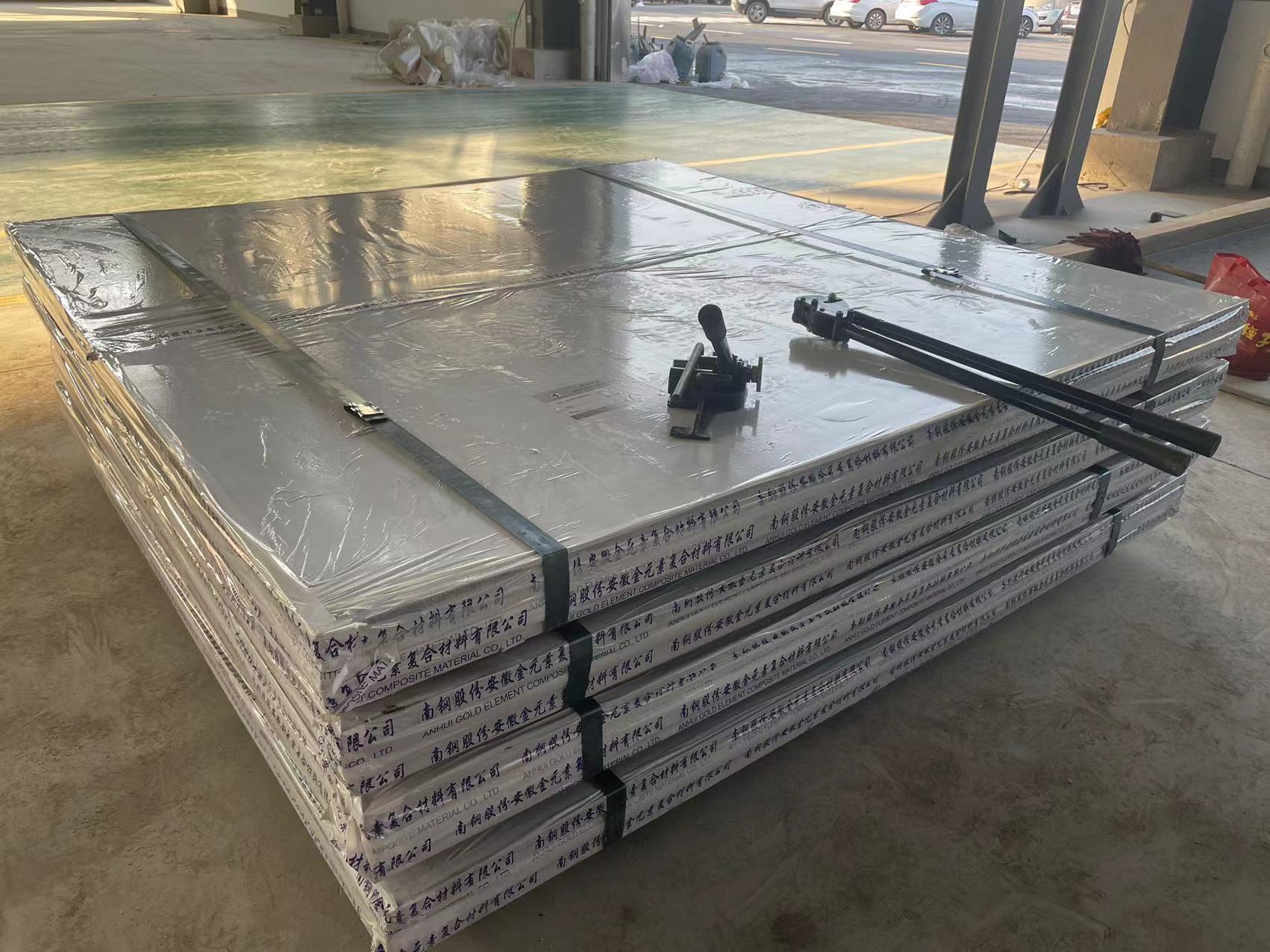
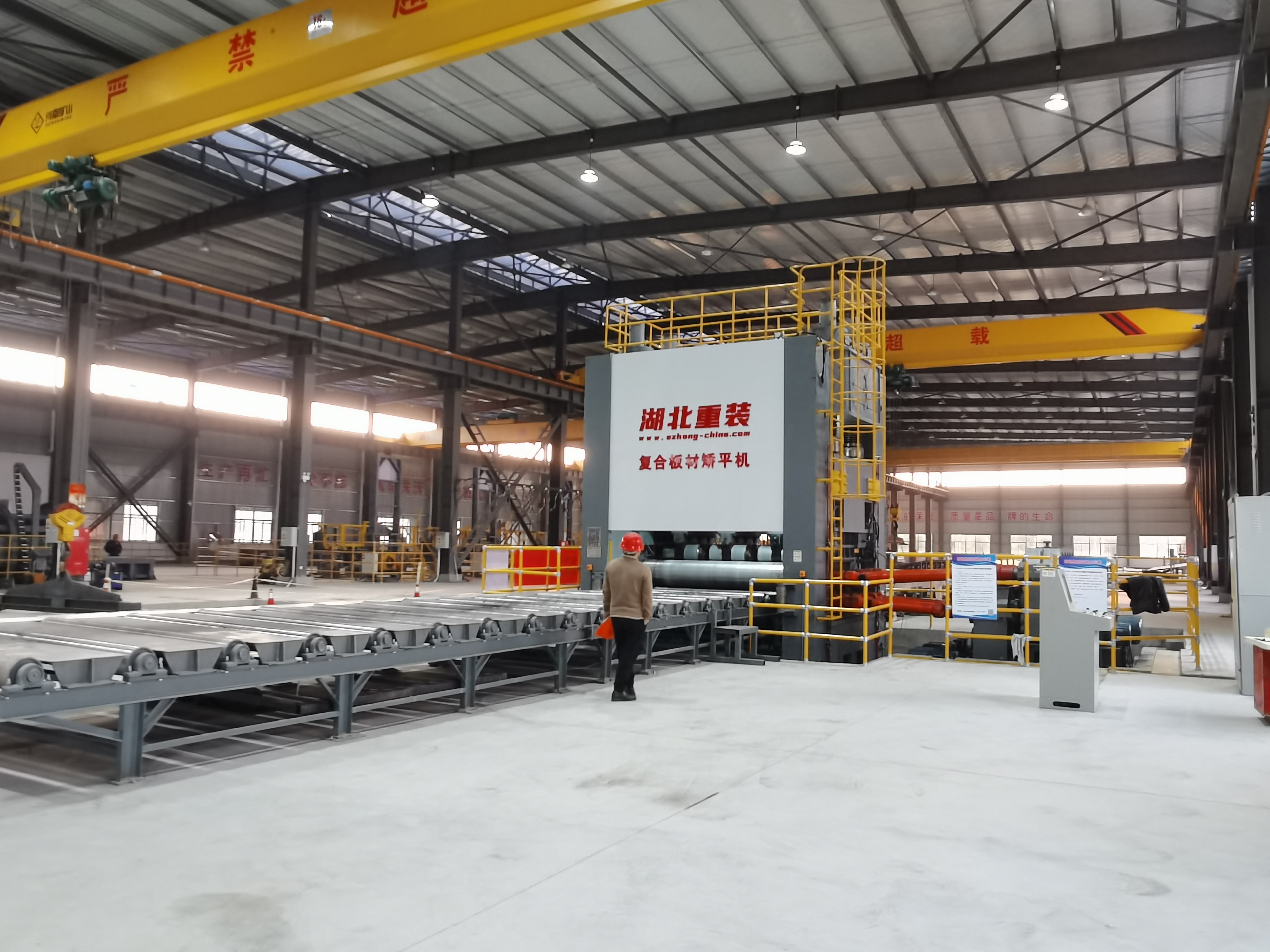
Q345 high-strength structural steel, closed-box welded construction, fully stress-relieved. Rigidity deflection <0.8mm under maximum composite bending load. Integrated elastomer pads reduce vibration.
42CrMo forged steel rollers with non-abrasive surface coating. 13 SAI hydraulic motors with individual planetary reducers (ratio 1:75). Flow divider valve maintains ±3% load balance.
Variable displacement swashplate pump (100 cc/rev), 13 independent proportional spool valves. PLC-based adaptive pressure curve per composite material type. 200 bar relief, 30L accumulator.
Siemens S7-1200 with advanced process control module, 10-inch touchscreen with material-type selector. 13 pressure transducers, ultrasonic detection unit, emergency stops at 4 locations.
| Model | Max Thickness (mm) | Plate Width (mm) | Base Steel Yield (MPa) | Clad Layer Types | Working Rollers | Leveling Precision (mm/m²) | Delamination Detection | Dimensions L×W×H (mm) |
|---|---|---|---|---|---|---|---|---|
| EZW43C-12×2000 | 12 | 2000 | 1000 | Stainless/Nickel | 13 | 1.2 | Optional | 5800×2400×2600 |
| EZW43C-15×2000 | 15 | 2000 | 960 | Stainless/Nickel | 13 | 1.2 | Optional | 6000×2400×2700 |
| EZW43C-20×2500 | 20 | 2500 | 1000 | Multi-layer | 13 | 1.2 | Optional | 6400×2800×2800 |
| EZW43CY-12×2200 | 12 | 2200 | 1100 | Stainless/Nickel | 13 | 1.0 | Standard | 6100×2600×2700 |
| EZW43CY-20×2200 | 20 | 2200 | 1100 | Multi-layer | 13 | 1.0 | Standard | 6500×2600×2900 |
| EZW43CY-25×2500 | 25 | 2500 | 960 | Premium Clad | 13 | 1.0 | Standard | 6800×2900×3000 |
Material: Stainless 304-clad carbon steel; Thickness: 12-20mm; Application: reactor vessels, heat exchangers, industrial tanks. Key requirement: perfect bond-line integrity; no delamination; corrosion resistance maintained.
Material: Duplex 2205-clad carbon steel for high-corrosion environments; Thickness: 15-25mm; Application: subsea pipeline components, offshore structures. Key requirement: bond-line uniformity critical for fatigue resistance; withstand ±20°C thermal cycling.
Material: Nickel-on-carbon steel; Thickness: 10-20mm; Application: crusher plates, grinding mill liners, pump casings. Key requirement: bond-line must survive high-impact loading; no delamination under shock.
Material: Stainless steel clad 304L/316L on carbon base; Thickness: 8-15mm; Application: vessel shells, agitator blades, jacket walls. Key requirement: FDA/ASME compliant; seamless bond; no contamination risk.
Material: Hastelloy/Inconel-clad carbon steel; Thickness: 12-25mm; Application: reactor shells, distillation column sections. Key requirement: bond integrity under thermal shock (200-400°C cycling); high-pressure containment.
Material: Erosion-resistant alloy clad on carbon steel base; Thickness: 15-25mm; Application: pump housings, valve bodies, choke trim plates. Key requirement: bond-line withstands 300+ bar hydrostatic pressure; no delamination under sustained load.

Challenge: Stainless 304-clad carbon steel reactor shells (15mm). Previous 3-roll equipment caused 8-12% delamination rate. Scrap cost €80-120 per component.
Solution:
EZW43CY-20×2200 with split-roller independent drive + ultrasonic delamination detection.
Result:
Delamination rate reduced to 0.3%; material waste reduced from €180K/year to €15K/year; leveling precision ±1.0mm/m².
Challenge: Duplex 2205-clad carbon steel (20mm) for subsea pipeline components. Customer rejecting 6% of deliveries post-weld testing.
Solution:
EZW43CY-20×2200 with ultrasonic delamination monitoring + real-time pressure adjustment.
Result:
Rejection rate reduced from 6% to <0.5%; zero warranty claims; one-pass capability; long-term supply agreement awarded.
Challenge: Nickel-clad carbon steel crusher plates (18mm). High-impact loading caused premature bond-line failure. Warranty claims averaging 12% annually.
Solution:
EZW43CY-20×2200 with edge-roller stress equalization + proprietary pressure curve for nickel composites.
Result:
Warranty claims reduced from 12% to 1.2%; product life extended from 18 months to 36+ months; +€450K annual revenue.
Challenge: Stainless 316L-clad carbon steel vessel components (12mm). Previous equipment scuffing caused surface defects; batch rejection rate 8%.
Solution:
Custom EZW43CY-12×2200 with ceramic-coated rollers + delamination detection + automated quality documentation.
Result:
Batch acceptance improved from 92% to 99.8%; zero iron contamination; FDA audit-ready; 5-year contract extension.
Delamination is separation of clad layer from base steel at the bonding interface. Critical because composite plates have directional weakness at bond-line (weakest point). During bending, stress concentrates at bond interface. Improper leveling causes micro-delamination that propagates under service loading, causing premature failure.
Traditional cross-shaft drive creates torque ripple (±8-12% variance), causing asymmetric pressure spikes. Composite plates tolerate no asymmetry (bond-line stress concentrates). Independent motor per roller eliminates torque ripple (<±1%), distributing stress uniformly across bond-line. Prevents delamination initiation.
Yes. System accommodates up to 3-layer composites (e.g., stainless-nickel-stainless sandwich). Pressure curve customizable per layer composition. Delamination detection monitors all bond-lines simultaneously. Consult engineering for specific multi-layer material combinations.
Optional ultrasonic system adds 5-7 sensors + signal processing unit (cost +€45K). Standard model uses pressure-curve optimization only (no active monitoring). For high-value composites or mission-critical applications (subsea, aircraft), optional system recommended. Detects micro-delamination 2-3 minutes before visible failure.
Stainless corrosion resistance depends on passive oxide layer. Iron contamination (typical rolling scuffing) initiates galvanic corrosion, destroying passivity. Ceramic coating (hardness HV 1200-1400) eliminates scuffing debris; prevents iron transfer. Stainless surface remains uncontaminated post-leveling.
| Accessory | Lead Time | Function | Value for Composites |
|---|---|---|---|
| Ultrasonic Delamination Detection System | 8 weeks | Real-time bond-line monitoring, auto-pressure reduction | Detects micro-delamination 2-3 min before visible failure; prevents scrap |
| Ceramic-Coated Roller Set | 6 weeks | Premium surface protection for stainless composites | Eliminates iron contamination; preserves corrosion resistance |
| Multi-Layer Material Database Expansion | 4 weeks | 20+ new composite material pressure curves | Enables rapid setup for exotic clad materials (Hastelloy, Inconel, etc.) |
| Automatic Quality Documentation System | 5 weeks | Generates compliance reports per plate (FDA/ASME compatible) | Traceability for regulated industries (pharma, aerospace) |
| Advanced Pressure-Curve Optimization Software | 6 weeks | ML-based curve tuning per material batch analysis | Auto-optimizes curve per material variance; -5% scrap rate improvement |